
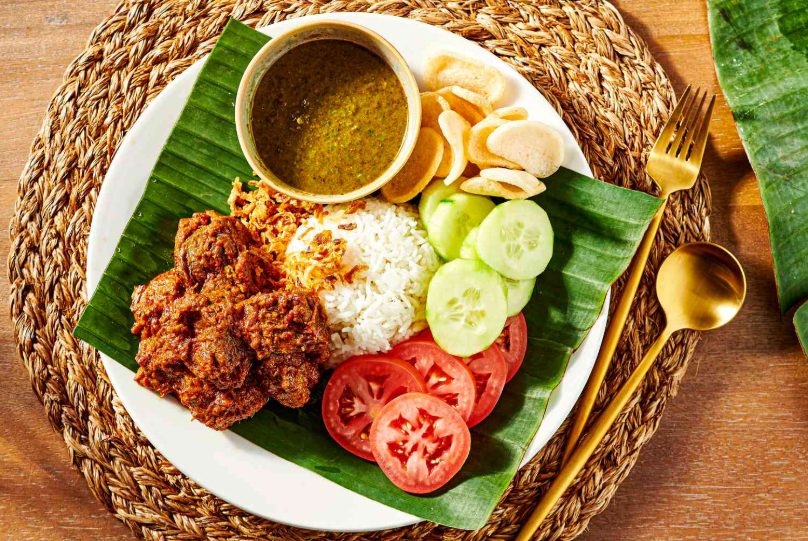
Taste is subjective. Yet somehow, one dish from the highlands of West Sumatra managed to rise above thousands of contenders and claim the top position in a global food ranking not once, but twice. Rendang, the slow-cooked dry beef curry of the Minangkabau people, was named the world's most delicious food by CNN Travel in 2011. Six years later, in 2017, it returned to defend and retain that title in a subsequent polling.
That kind of consistency does not happen by accident. Behind every plate of rendang lies a culinary philosophy that has been passed down through generations, refined through ritual, and carried across oceans by the Minang diaspora. Understanding rendang means understanding why some foods transcend borders while others remain local curiosities.
What CNN's Global Poll Revealed About Culinary Excellence
The CNN Travel poll that elevated rendang was not a niche food blogger competition. It was a large-scale public survey titled "World's 50 Best Foods," drawing participation from food enthusiasts, travelers, and culinary professionals across multiple continents.
Rendang did not merely place it topped the list, outranking staples from Italian, Japanese, French, and Mexican cuisines that collectively dominate global fine dining conversations.
The 2017 repetition carried even more weight. A single viral moment can inflate one-time results. A sustained ranking across two separate polling cycles, separated by six years of evolving global food culture, reflects genuine and widespread appreciation.
Rendang earned its place on merit, not circumstance.
This recognition shifted how the international food community perceived Indonesian cuisine as a whole. Prior to these polls, Indonesian food largely remained in the shadow of neighboring Thai and Vietnamese cuisines in global tourism discourse.
The rendang ranking opened a broader conversation about the depth and sophistication of the Indonesian culinary tradition.
How the Minangkabau Kitchen Shaped a World-Class Dish
Rendang did not emerge from restaurant kitchens or culinary institutes. It was born in the domestic hearths of the Minangkabau people of West Sumatra, specifically from the Padang region and surrounding highland communities.
The Minangkabau are a matrilineal society, and the knowledge of rendang preparation has historically been transmitted through women from grandmother to daughter to granddaughter as both practical skill and cultural inheritance.
The dish was originally developed not as daily food but as ceremonial fare, prepared for weddings, harvest festivals, and the welcoming of honored guests. Its complexity demanded time and collective effort, making it a food of occasion rather than convenience.
As the Minang people became one of Indonesia's most mobile ethnic groups through the tradition of merantau voluntary migration for personal, and economic development, rendang traveled with them.
Padang restaurants, recognizable by their window displays stacked with dozens of small dishes, became one of the most widespread food establishments across the Indonesian archipelago and eventually in major cities globally.
The Science and Patience Behind the Flavor
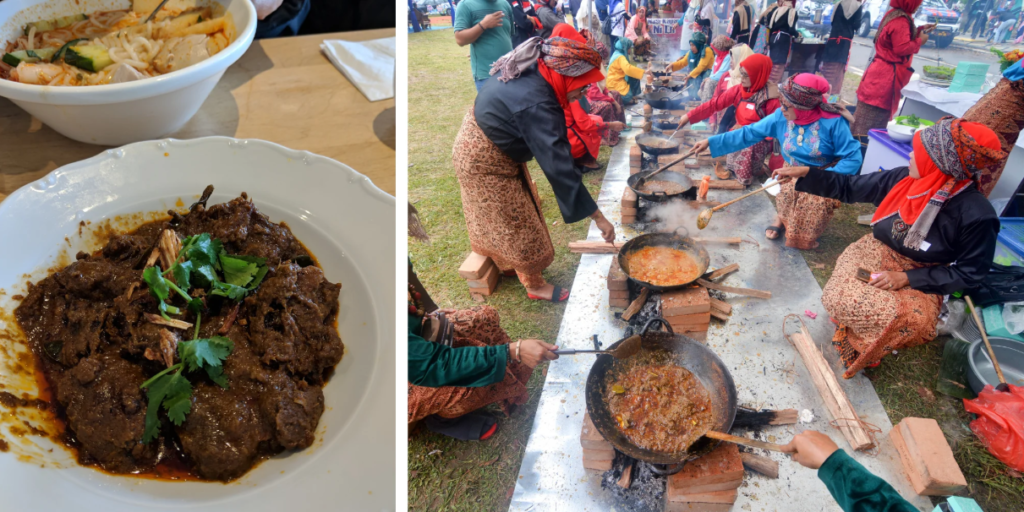
What distinguishes rendang from other braised or stewed meat preparations is the cooking method known locally as merandang. The process begins with beef simmered in thick coconut milk alongside an extensive spice paste. This paste typically includes lemongrass, galangal, shallots, garlic, red chilies, turmeric, and kaffir lime leaves, a combination that creates layered heat, fragrance, and depth simultaneously.
The cooking continues over low heat for several hours. During this time, the coconut milk gradually reduces. Its fat separates and begins to fry the meat and spices in a process of natural caramelization. The liquid phase gives way entirely to a dry, intensely flavored coating that clings to every fiber of the beef.
This stage is what food scientists would describe as the Maillard reaction occurring within a spiced fat medium of producing the dark, complex crust that is the visual, and textural signature of properly made rendang.
The result of this extended process is more than flavor. The thorough cooking of the coconut fat combined with the antimicrobial properties of several spices particularly galangal and turmeric produces a dish with natural preservation qualities.
Traditional rendang prepared correctly can remain safe for consumption at room temperature for up to three days, and considerably longer when stored under cooler conditions.
A Characteristic made rendang an ideal food for long journeys in a pre-refrigeration era, further accelerating its spread across the archipelago and beyond.
A Spice Profile That Demands No Shortcuts
The spice architecture of rendang is not decorative. Each component performs a specific function, and the balance between them is what separates authentic rendang from approximations. Lemongrass provides citrusy brightness that cuts through the richness of coconut.
Galangal delivers an earthy, pine-like sharpness that deepens into the meat. Red chilies bring progressive heat that builds rather than spikes.
Shallots and garlic form the aromatic base that carries everything together. Turmeric contributes both color and a subtle bitterness that prevents the dish from becoming cloying despite its richness. Kaffir lime leaves add floral notes that surface in the finish.
Some regional variations incorporate toasted coconut kerisik grated and pressed until it releases its oil, adding another layer of nuttiness to the caramelized exterior. The spice paste must be ground fresh and cooked with patience before the coconut milk is added.
Premade pastes or powdered substitutes disrupt the sequence of flavor development. This is why rendang made with shortcuts tastes different in ways that are difficult to articulate but immediately apparent to those familiar with the original.
UNESCO Recognition and the Weight of Cultural Heritage
In 2013, Indonesia submitted a collection of its culinary traditions to UNESCO for consideration as Intangible Cultural Heritage. Rendang, alongside several other dishes, received formal inscription on the UNESCO Representative List of the Intangible Cultural Heritage of Humanity. This recognition was not solely about the taste of the dish.
UNESCO evaluated the social practices, rituals, and knowledge systems surrounding rendang production, the communal cooking during ceremonies, the oral transmission of technique, and the role of the dish in Minangkabau identity and social cohesion.
The UNESCO listing formalized what the Minangkabau community had always understood: rendang is not just food. It is a living cultural document, encoding the values, ecology, and social structure of the people who created it.
The spices used in rendang grow in the West Sumatran landscape. The cooking process reflects a philosophy of patience and transformation. The dish itself represents hospitality as a form of respect.
Regional Variations Across the Archipelago
As rendang traveled through Indonesian migration patterns and adapted to local ingredient availability, distinct regional interpretations developed. West Sumatran rendang in its original form tends toward the darkest and driest preparation, with maximum caramelization and an intensely concentrated flavor profile. This version prioritizes longevity and depth.
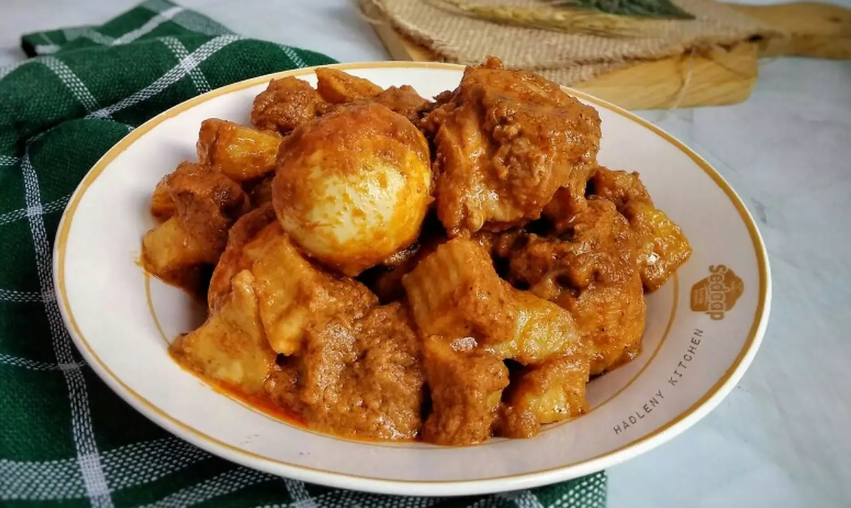
In other regions, particularly in Riau and parts of Sumatra's coastal areas, a wetter version called kalio is more common. Kalio represents an earlier stage in the merandang process, the coconut milk has reduced but not fully caramelized, leaving the dish with a golden sauce rather than a dry coating.
While technically a different preparation, many outside the Minangkabau tradition use the terms interchangeably.
Java, Kalimantan, and Sulawesi have each developed rendang adaptations that incorporate local spice preferences. Some versions use chicken or duck rather than beef. Others integrate regional chilies that shift the heat profile.
These variations testify to the dish's adaptability without diluting the core principle: patient, spice-forward slow cooking in coconut milk.
How Global Recognition Shapes Indonesia's Culinary Identity
The international visibility of rendang has created a measurable impact on how Indonesia positions itself in global tourism and cultural diplomacy. The Indonesian government and tourism bodies have consistently referenced the CNN rankings in promotional materials targeting international visitors.
Rendang appears as a centerpiece in culinary tourism campaigns across West Sumatra, with Bukittinggi and Padang city emerging as anchor destinations for food travelers seeking the original preparation.
Beyond tourism, the rendang narrative has strengthened the global Padang restaurant industry. Establishments in the Netherlands, Malaysia, Singapore, Australia, and Saudi Arabia, all countries with significant Indonesian diaspora communities have reported increased customer interest from non-Indonesian clientele following the international rankings.
The dish has become an accessible entry point into Indonesian cuisine for first-time explorers who arrive knowing only one name.
Why Rendang Belongs in Every Serious Food Conversation
The story of rendang reaching the top of a global food poll is really a story about what happens when a culinary tradition is built on substance rather than marketing. The Minangkabau did not design rendang for international appeal. They built it around the realities of their environment, their ceremonies, and their values.
The result was a dish so complete in its flavor development, so intelligent in its preservation method, and so deeply embedded in cultural meaning that it required no adjustment to compete globally.
The 2011 and 2017 CNN rankings were recognition, not creation. Rendang had always been extraordinary. The world simply took time to pay attention.
For anyone serious about understanding what Indonesian cuisine represents at its highest expression, rendang from Padang is not a starting point, it is the standard by which everything else is measured.
Rendang on Every Street: Where to Find It Across Indonesia
One of the most remarkable qualities of rendang as a cultural export is its physical accessibility across the entire Indonesian archipelago. Unlike many heritage dishes that require a pilgrimage to their origin region, rendang can be found with minimal effort in virtually every Indonesian city, town, and roadside strip.
The vehicle for this distribution is the Padang restaurant ecosystem, a network of thousands of establishments ranging from humble roadside warungs to multi-branch dining institutions that collectively form one of the most consistent food service networks in the country.
The most recognizable format is the warung masakan Padang, identifiable by its front window stacked with small plates of various dishes displayed at room temperature. Among them, rendang almost always occupies a central position.
National chains such as Restoran Sederhana and Restoran Ampera have built their reputations in part on consistent rendang quality, with dozens of branches spread across Java, Sumatra, Bali, and Kalimantan.
These establishments operate on a pesan-pilih system diners select from pre-cooked dishes displayed at the counter which means rendang is available immediately without waiting.
Beyond the established chains, independent Padang restaurants operating under names like Garuda, Gadang Barubah, Sari Minang, and countless unnamed family operations serve rendang prepared from house recipes that have often remained unchanged for decades.
In cities like Jakarta, Surabaya, Bandung, Medan, and Makassar, a Padang restaurant is rarely more than a few blocks away from any given point.
In smaller regencies and district capitals across Java and the outer islands, the warung Padang frequently functions as the anchor dining option for the entire area.
For travelers specifically seeking the highest-expression version, West Sumatra remains the benchmark. In Padang city and Bukittinggi, dedicated rendang producers and long-running family restaurants offer preparations using locally sourced galangal and lemongrass varieties that differ in intensity from what reaches other regions.
The Pasar Raya Padang area in particular concentrates several well-regarded establishments within walking distance, making it a practical base for culinary tourism focused on rendang in its original context.