

Indonesia's entertainment industry has long produced performers who rise quickly and fade just as fast. The cycle is familiar: a breakout role, a wave of attention, then silence. Michelle Ziudith Waselly does not follow that pattern. Since her first appearance on national television in 2011, she has built a career defined not by viral moments but by consistent creative depth, expanding her presence across film, music, and modelling while remaining one of the most recognisable faces in Indonesian popular culture.
A Medan-Born Talent Who Chose the Stage Early
Michelle Ziudith Waselly was born on January 20, 1995, in Medan, North Sumatra, a city long known for producing performers with a distinct creative edge. Her entry into the entertainment world came through the Miss Celebrity pageant in 2009, when she was just fourteen years old.
That early exposure to public performance shaped her confidence and laid the groundwork for a professional career that would follow within two years.
By 2011, she had secured her first television role in the soap opera Arti Sahabat, marking a debut that introduced her to a national audience at an age when most young performers are still finding their footing.
Love in Paris and the Role That Changed Everything
The turning point in Michelle's career arrived with the soap opera Love in Paris, where she portrayed the character Yasmin alongside a cast that quickly became central to Indonesian primetime television. The series gave her the kind of sustained visibility that a single film rarely provides, and her performance drew consistent attention for its emotional authenticity.
Audiences responded not just to the character but to the naturalism she brought to every scene, a quality that would define her work across every medium she entered.
Love in Paris established her as more than a promising newcomer; it confirmed her as a principal talent in Indonesian dramatic television.
Magic Hour and the Breakthrough onto the Big Screen
Michelle Ziudith transition from television to film arrived with Magic Hour in 2015, a romantic drama that became one of the most-watched Indonesian films of its release year. Her performance as the female lead demonstrated that her range extended well beyond the serialised format of soap operas, carrying the emotional weight of a feature-length narrative across a demanding production.
The film's commercial success opened doors that few television actors manage to access, positioning her alongside Indonesia's most bankable screen personalities.
London Love Story followed in 2016, deepening her association with romantic cinema and confirming that her appeal to Indonesian audiences was not tied to a single format or a single story.
Emotional Sensitivity Transformed Into Creative Strength
One of the more revealing aspects of Michelle's career trajectory is her own account of her early hesitation toward leading roles. She has spoken openly about an initial reluctance driven by emotional preoccupation, a sensitivity to the weight of character work that she found difficult to manage in the early stages of her career. Rather than treating this as a limitation, she reframed it as a resource.
The same emotional attunement that made leading roles feel overwhelming became the instrument through which she delivered performances that consistently register as genuine rather than constructed. That shift from hesitation to mastery represents one of the more quietly significant creative developments in her professional story.

Ipar Adalah Maut and a Career-Defining Dramatic Turn
The 2024 film Ipar Adalah Maut marked a significant moment in Michelle's filmography, presenting her with a character whose complexity demanded a different register than the romantic leads she had become known for. Her portrayal of Nisa drew widespread attention and demonstrated a willingness to move beyond the comfort of established audience expectations.
For a performer whose reputation had been built substantially on romantic cinema, taking on a role in a drama centred on darker family dynamics signalled a deliberate expansion of creative range.
The film's reception confirmed that her audience was prepared to follow her into more challenging narrative territory.
Alas Roban and the Pull Toward Mystery Drama
Her role as Sita in the mystery drama Alas Roban continued that trajectory into more complex storytelling. The production placed her within a genre that Indonesian cinema has been developing with increasing ambition, drawing on local folklore and psychological tension in ways that distinguish it from the romantic drama format that dominated her earlier career.
Michelle Ziudith presence in a project of this nature reflects both a personal creative appetite and a reading of where Indonesian screen storytelling is heading.
Mystery and thriller formats are attracting growing audience interest domestically and regionally, and Michelle's involvement positions her at the intersection of established popularity and emerging genre territory.
Jangan Panggil Mama Kafir and the Weight of Social Narrative
The film Jangan Panggil Mama Kafir, in which she portrayed Maria alongside Giorgino Abraham, brought her into contact with subject matter that carries genuine social weight in the Indonesian context. The narrative explores family relationships across differences in faith, a theme that resonates deeply within a society defined by religious plurality and the tensions that plurality sometimes produces.
Choosing to participate in a project with this kind of social dimension reflects a creative seriousness that extends beyond commercial calculation. The film's premise requires performers who can hold the emotional complexity of its subject without simplifying it, and Michelle's involvement speaks directly to that requirement.
A Singing Career Built on Soundtrack and Original Work
Parallel to her screen career, Michelle has maintained an active presence in music. Her releases include soundtrack singles tied to her film work as well as original material, with Tembang Ani Ani and Angel Pol among the tracks that demonstrate a musical identity operating independently of her acting profile.
Indonesian performers who sustain credible careers across both screen and music are rarer than the industry's surface activity might suggest, and the consistency of her musical output places her in a distinct category. Her approach to music is not promotional decoration attached to film releases but a sustained creative practice running alongside her screen work.
Modelling and the Visual Language of Indonesian Style
Michelle's modelling career adds a third dimension to a creative profile that resists reduction to a single discipline. Her visibility in fashion and brand contexts has introduced her to audiences who may encounter her work outside the cinema and television formats that anchor her primary reputation.
In the Indonesian context, where the intersection of entertainment and fashion carries significant cultural weight, her presence across both spheres reinforces a creative identity that is multidimensional by design rather than by accident.

A Filmography That Traces the Arc of Indonesian Cinema
The breadth of Michelle's screen credits across fifteen years reflects not just personal ambition but the shifting landscape of Indonesian film and television itself. Her early television work spanned soap operas and a run of TV movies including Kujadikan Kamu Pacarku, I Miss U I Need U, and Pacarku Jago Kungfu that kept her visible between larger productions.
Michelle Ziudith big screen transition began with Remember When (2014) as Freya, a role that earned her a nomination for Best New Actress at the Piala Maya Awards.
Magic Hour (2015) and London Love Story (2016) extended her commercial reach into the mid-decade peak of Indonesian romantic cinema, before ILY from 38,000 Ft deepened her association with emotionally driven narratives.
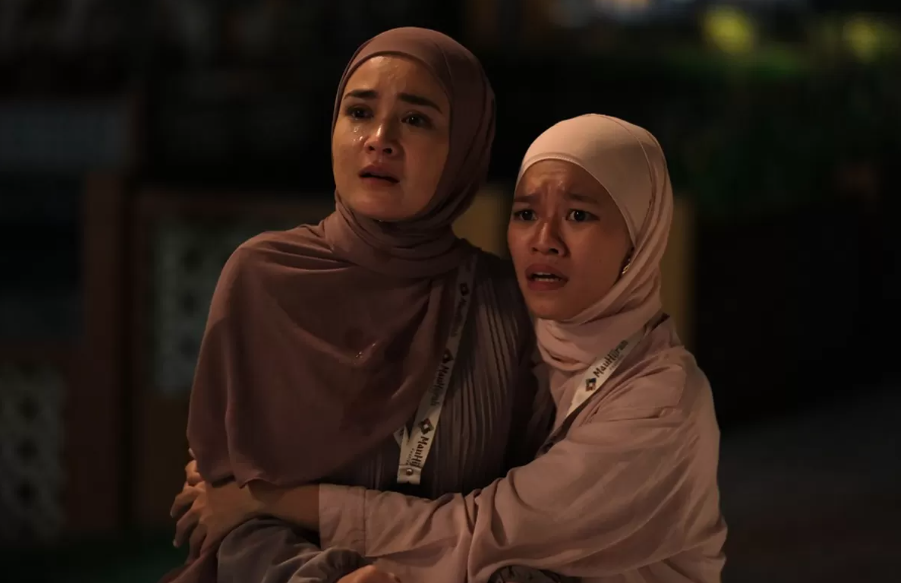
More recent credits including Assalamualaikum Baitullah (2025) as Amira and the upcoming Arafuru 1962 demonstrate the genre range she has navigated deliberately. Each credit represents a step away from the romantic lead template and toward a filmography capable of holding more varied dramatic weight.
Music, Fashion and the Architecture of a Creative Enterprise
Michelle Ziudith's creative output extends well beyond screen performance into music and entrepreneurship, building what amounts to a self-contained creative enterprise across multiple industries. Her first single Kau dan Aku arrived in 2015, followed by Oi Kakete Yuku two years later, produced by Sion Music and Art.
Soundtrack contributions have accompanied several of her film projects, running parallel to her screen appearances rather than functioning purely as promotional material.
The launch of her Hardware Clothing line established a brand asset that operates independently of the entertainment industry's project-by-project rhythms, one that does not depend on any single film performing well at the box office.
This multi-stream architecture is what distinguishes Indonesian Artists who build lasting cultural presence from those whose visibility is tied exclusively to screen exposure.
What Michelle Ziudith Represents for Indonesian Creative Culture
Michelle Ziudith Waselly's career offers a specific kind of evidence about the direction Indonesian creative culture is taking. She represents a generation of performers who entered the industry through traditional television formats and built their reputations through sustained work rather than single viral moments, then expanded into film, music, and fashion in ways that reflect genuine creative range.
Her willingness to take on socially resonant material alongside commercially successful romantic drama suggests a performer who understands both the industry she works within and the audience she serves.
From Medan to the National Stage: A Creative Profile Still in Motion
Michelle Ziudith Waselly began her career as a teenager from Medan entering a pageant, and she has arrived at a point where her filmography spans box office romantic hits, socially engaged drama, mystery narratives, and music releases that carry their own creative weight. That arc is not accidental.
It reflects sustained decision-making about which projects to take, which creative risks to absorb, and which audience relationships to honour.
As Indonesian cinema continues to develop both domestically and in regional markets, performers with her combination of range, consistency, and cultural fluency will remain central to how that story unfolds. Michelle Ziudith is not at the end of that story, she is somewhere in the middle of it, and that is precisely where the most interesting creative work tends to happen.