

Nabire City serves as the administrative capital of Central Papua Province, positioned along the southern coastline of Cenderawasih Bay and functioning as the primary logistics, government, and commercial hub for a province defined by highland agricultural zones, deep-sea marine resources, and significant mineral wealth distributed across its interior regencies.
Geographical Position, Topography, and Regional Administrative Division
Nabire City sits at approximately 3°22' South latitude and 135°29' East longitude on the southern rim of Cenderawasih Bay, in the transitional zone between New Guinea's coastal lowlands and the Central Highlands range rising steeply to the south and west. The coastal plain on which the city's urban core sits is relatively flat, fed by several river systems draining from the highland interior, including the Nabire River which historically defined the primary settlement corridor.
Terrain elevation increases rapidly as the land moves inland, transitioning from alluvial plains into montane forest within a distance that compresses multiple ecological zones into close proximity with the city's administrative boundary.
Nabire City organizes its territory into subdistricts and wards under the municipal government structure, with service delivery expanding alongside population growth driven by transmigration programs and the city's elevation to provincial capital status following Central Papua Province's establishment in 2022.
From Transmigration Area to Capital of Central Papua Province
Nabire's urban development trajectory differs from most Indonesian provincial capitals in that its growth was substantially shaped by government-directed transmigration programs rather than organic trade accumulation or colonial administrative designation. From the 1970s onward, resettlement programs brought agricultural migrant households from Java, Bali, and other densely populated Indonesian islands into the Nabire lowlands.
Establishing farming settlements across the coastal plain and generating the demographic base that supported the city's subsequent commercial and administrative expansion.
Prior to large-scale transmigration, Nabire functioned as a small coastal settlement within the broader administrative structure of Irian Jaya Province, serving local fishing communities and limited government posts. The gradual build-up of population, infrastructure, and commercial activity through the transmigration period positioned Nabire as the dominant urban center in the central coastal zone of Papua.
When the provincial reorganization process resulted in the formal establishment of Central Papua Province in 2022 under Law No. 14 of 2022, The City was designated as the provincial capital, triggering a new phase of accelerated government investment in office construction, road infrastructure, and public service expansion across the city's subdistricts.
Majority Ethnicity, Cultural Ties, and Social Heterogeneity
Nabire City's population reflects the layered demographic history produced by decades of transmigration alongside the indigenous Mee, Wamesa, and coastal Papuan communities whose ancestral territories encompass the Nabire lowlands and surrounding highlands.
The Mee people, also known as the Ekari or Ekagi, are the dominant indigenous ethnic group in the Central Highlands zone feeding into Nabire's administrative and commercial orbit, and their cultural presence is consistently visible in the city's market activity, ceremonial events, and land tenure negotiations.
Javanese, Balinese, Buginese, and Makassarese migrant communities constitute a substantial share of Nabire City's urban population, concentrated in the agricultural settlement zones, retail trade sector, and government services workforce.
This ethnic heterogeneity has produced a social environment where inter-community relations are managed through both formal government mediation structures and informal customary negotiation processes.
The city's social fabric reflects a pragmatic coexistence model shaped by shared economic interest in Nabire's function as the commercial and administrative center for a resource-rich province still building its governance infrastructure.
Papuan Dialects, Language Variation, and the Slang Term Kam
The linguistic environment of this City encompasses Mee, Wamesa, and several coastal Papuan languages alongside Indonesian as the dominant public communication medium across government, education, and commercial settings.
The Mee language, spoken by the indigenous highland population with the deepest territorial connection to the Central Papua Province interior, has multiple dialect variants corresponding to different highland subgroup communities, and its speakers constitute a significant presence within Nabire's market and social spaces.
The colloquial pronoun "kam," derived from local Papuan language structures and widely adopted across the city's everyday speech, functions as an informal second-person address used across ethnic communities in Nabire's urban vernacular.
Its use in casual conversation, market interactions, and peer-to-peer social settings marks familiarity and local belonging, operating as a sociolinguistic identifier that distinguishes Nabire's urban speech register from formal Indonesian and from the dialects of other Papuan cities.
The term has been absorbed into the speech patterns of non-Papuan migrant residents as a marker of local integration and social ease within the city's multicultural daily environment.
MAF Beach, Governor's Office Complex, and the Rocket Monument
MAF Beach occupies a stretch of the City's coastal front accessible from the urban center, named for its proximity to the Mission Aviation Fellowship operational base that has historically served as a critical air transport infrastructure node for remote highland communities across Central Papua.
The beach functions as a public recreational space for city residents and serves as a reference landmark within Nabire's coastal geography. The waterfront setting adjacent to the MAF operational zone gives the site a distinctive character combining civic leisure use with active aviation infrastructure.
The Governor's Office Complex serves as the administrative center of Central Papua Province, housing the provincial executive government functions and the supporting bureaucratic infrastructure that has expanded rapidly since the province's 2022 establishment.
The Rocket Monument, located at a prominent public space within the city, stands as a civic landmark commemorating aspects of Nabire's connection to Indonesia's early aerospace ambitions, referencing historical rocket launch activity conducted from the Nabire area during the national space program's development phase.
Both structures anchor the city's central zone as the administrative and symbolic core of the new province.
Kwatisore Whale Sharks, White Sand Beaches, and Bihewa Waterfall
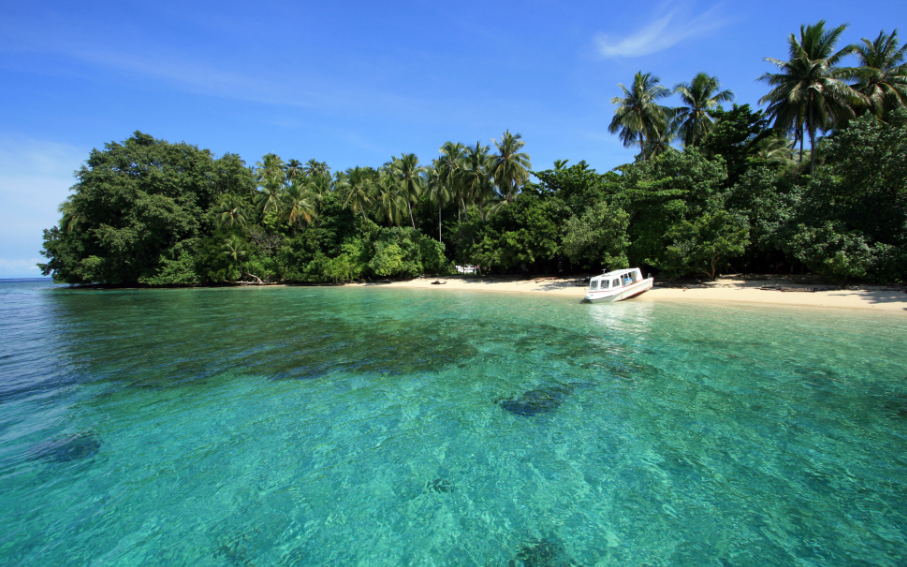
The Kwatisore area within Nabire's broader coastal zone is internationally recognized as one of the most reliable locations in the world for whale shark interaction, with aggregations of whale sharks appearing consistently in the shallow coastal waters near fishing platforms known as bagan.
The phenomenon draws wildlife tourism visitors from across Indonesia and from international markets, and Kwatisore whale sharks have been featured in international marine conservation communications as a flagship example of community-based marine tourism generating both conservation and economic value for local fishing households.
White sand beaches distributed along Nabire's coastal margin provide accessible recreational destinations for both resident and visitor populations, with several sites developed with basic visitor infrastructure including food stalls and boat rental services.
Bihewa Waterfall, located in the highland terrain accessible from Nabire City via interior road routes, offers a contrasting natural attraction in a forested highland setting.
The waterfall draws domestic visitors seeking cooler highland temperatures and forest landscape environments distinct from the coastal urban experience, contributing to a diversified natural tourism portfolio centered on Nabire City as the logistical base for exploration across Central Papua Province.
Macro Retail Centers and Moanemani Specialty Coffee Culture
Nabire City's modern retail landscape is anchored by macro-scale retail facilities serving both urban household consumption and the restocking needs of traders supplying goods to remote highland communities accessible via the city's road and air logistics network.
These retail centers function as wholesale and semi-wholesale distribution points as much as consumer retail spaces, reflecting Nabire's role as the supply hub for a large interior hinterland with limited direct access to national distribution networks.
Coffee culture in Nabire has developed around the Moanemani specialty coffee identity, drawing on arabica varieties grown in the Moanemani highland area of the Dogiyai Regency within Central Papua Province's administrative orbit.
Independent coffee shops in Nabire's commercial zone have built their brand positioning around the Moanemani origin, connecting urban cafe consumption directly to highland smallholder production and positioning Nabire within the broader specialty coffee market narrative that has elevated several Papua highland origins to international specialty buyer attention.
The cafe format has become a standard feature of the city's commercial streetscape and a social infrastructure element serving the growing population of government employees, university students, and private sector workers based in the provincial capital.
Orchid Noken Craft and Teluk Bay Wood Carving Traditions
Noken production in Nabire carries a local variation distinguished by the incorporation of orchid fiber and floral motifs drawn from the region's exceptional botanical diversity, producing a craft variant recognizable within the broader Papuan noken tradition for its distinctive material and decorative character.
Women producers in Nabire's subdistricts and surrounding communities maintain household-level noken production using both traditional natural fiber techniques and commercial yarn adaptations, with output sold through local markets, craft shops, and cultural tourism channels connecting visitors to artisan producers.
Wood carving traditions associated with the Teluk Cenderawasih coastal communities represent a complementary creative industry strand within Nabire's craft sector. Carved objects including ceremonial paddles, figural sculptures, and architectural decorative elements draw on coastal Papuan visual traditions and are produced by craftspeople whose skills are transmitted within family and community lineages.
Both orchid noken and Teluk wood carving feed into a creative economy that intersects with Nabire's growing tourism sector and with provincial government cultural heritage programs supporting indigenous craft preservation and market development.
Gold Deposits, Nabire Oranges, and Wanggar Cocoa Commodities
Central Papua Province's mineral endowment includes significant gold deposits in interior regencies accessible from Nabire City's logistics infrastructure, positioning the provincial capital as a supply and service base for artisanal and small-scale gold mining activity concentrated in highland zones.
Gold movement through Nabire's commercial economy connects informal mining production to downstream trading and processing networks, and the commodity's presence in the regional economy influences both financial sector activity and retail trade patterns across the city's market infrastructure.
Nabire oranges, grown in the highland agricultural zones surrounding the city, have developed regional recognition for their flavor quality and are marketed through Nabire's wholesale trading network to buyers in other Papuan cities. Wanggar cocoa, produced in the Wanggar area of Nabire's coastal agricultural zone, contributes a plantation commodity stream alongside the highland fruit production sector.
Both agricultural commodities feed into Nabire's role as a collection and redistribution hub connecting smallholder producers across Central Papua Province to the inter-island commodity trading networks operating through the city's port infrastructure.
Yellow Fish Soup, Taro Sago Karaka, and Local Culinary Identity
Yellow fish soup, prepared with fresh catch from Cenderawasih Bay seasoned with turmeric, lemongrass, and local aromatics, is the dominant culinary expression of Nabire City's coastal food identity and appears consistently as the primary dish in both household and restaurant settings across the city's subdistricts.
Its preparation follows conventions shared across coastal Papuan culinary culture while incorporating locally specific spice combinations and fish varieties that distinguish Nabire's version from similar preparations in other Papuan cities.
Taro sago karaka combines taro root and sago starch in a preparation that reflects the highland agricultural base feeding into Nabire's food culture from the Mee and other Central Highlands communities.
The dish appears in traditional food market settings and at ceremonial gatherings, maintaining active consumption alongside rice-based staples introduced through the transmigration period.
Together with yellow fish soup, taro sago karaka anchors a local culinary identity that reflects Nabire City's position at the intersection of coastal marine food culture and highland Papuan agricultural tradition, producing a distinctive food landscape visible across the city's markets and eating establishments.

Bank Papua, State-Owned Enterprises, and the Corporate Landscape
Bank Papua operates as the primary regional development bank serving Central Papua Province, with Nabire City hosting the provincial capital branch managing government salary disbursement, agricultural credit programs, and the growing transactional demand generated by the city's expanding public sector workforce.
National state-owned banks including BRI, BNI, and Bank Mandiri maintain operational branches in Nabire, serving both government and private sector financial needs across the provincial capital's subdistricts. The banking cluster in Nabire's central commercial zone has expanded alongside the city's elevation to provincial capital status.
State-owned enterprise expansion into Central Papua Province has accompanied the provincial establishment process, with entities managing electricity generation, telecommunications, port operations, and logistics infrastructure establishing or strengthening their operational presence in Nabire City.
These SOEs provide the utility and logistics foundation on which both government administration and private sector commercial activity depend, and their investment programs in Nabire reflect national policy commitments to accelerating infrastructure development across Papua's newly established provinces.
Samabusa Maritime Cluster and the Coastal Fishermen's Hub
The Samabusa area hosts Nabire City's primary maritime cluster, concentrating fishing vessel operations, fish landing and trading activity, boat maintenance facilities, and the supporting services sustaining both artisanal and semi-commercial fishing operations targeting Cenderawasih Bay's marine resources.
The cluster functions as the city's coastal economic engine for the fisheries sector, connecting local fishing households to urban fish markets and to the inter-island commodity trading networks moving seafood products through Nabire's port infrastructure.
Cenderawasih Bay is recognized as one of Indonesia's most biodiverse marine environments, and the fisheries resources accessible to Nabire-based fishing operations include tuna, snapper, grouper, and other commercially significant species.
Investment in cold chain infrastructure and fisheries management capacity at the Samabusa hub has been identified as a priority by provincial fisheries agencies.
Seeking to improve the economic returns captured by local fishing communities while building the supply chain reliability required to serve institutional buyers and processing facilities beyond the immediate urban market.
Douw Aturure Airport and Samabusa Port Connectivity Infrastructure
Douw Aturure Airport serves as Nabire City's primary air access facility, handling scheduled domestic routes connecting the provincial capital to Jayapura, Makassar, and other Indonesian cities. The airport's operational capacity directly determines the accessibility of Central Papua Province to government personnel, private investors, and humanitarian operators whose movement through Nabire shapes the pace of provincial development activity.
Runway improvement and terminal expansion programs have been incorporated into the national Papua development acceleration framework as priority investments given Nabire's new provincial capital status.
Samabusa Port manages maritime cargo and inter-island passenger ferry operations connecting Nabire to Manokwari, Sorong, Makassar, and other ports within Eastern Indonesia's shipping network. The port handles commodity exports including cocoa and agricultural products, receives consumer goods and construction material imports, and operates passenger services linking Nabire to surrounding regencies accessible by sea.
The combined function of Douw Aturure Airport and Samabusa Port establishes the dual-gateway infrastructure framework on which Nabire's logistics hub role for Central Papua Province depends.
Mee Pago Land Corridor and Central Highlands Connectivity
The road connectivity framework linking Nabire City to the Central Highlands zone of Central Papua Province constitutes the most strategically significant land infrastructure challenge and opportunity in the provincial capital's development agenda. The Mee Pago corridor, referencing the cultural and geographic identity of the highland Mee people whose territories extend from the coast into the interior mountain zones
Represents the overland route connecting Nabire to Paniai, Dogiyai, Deiyai, and other highland regencies that depend on the provincial capital for commodity trading, government services, and supply chain access.
Road conditions along the highland sections of this corridor involve significant gradient challenges, seasonal damage from rainfall and landslides, and bridge infrastructure limitations that restrict heavy freight movement and raise transport costs for highland communities.
National infrastructure investment programs targeting Papua's development acceleration have incorporated the Nabire to Central Highlands connectivity axis as a priority road improvement project.
Recognizing that reliable overland access between the coast and highlands is a prerequisite for Nabire's effective function as the logistics and administrative hub of Central Papua Province.
Nabire City as a Buffer Core for Central Papua's Golden Megacity
Provincial spatial planning frameworks position Nabire City as the foundational growth pole for a projected Golden Megacity concept that frames Central Papua Province's long-term urban and economic development trajectory.
The concept envisions Nabire as the service, logistics, and administrative core of an integrated provincial economy where mineral extraction, highland agriculture, marine fisheries, and ecotourism operate as complementary economic pillars feeding into a diversified growth model less dependent on any single commodity sector.
The buffer role assigned to Nabire within this projection reflects its geographic position as the accessible coastal node connecting Central Papua Province's resource-rich but infrastructure-limited interior to national and international economic systems.
Port capacity expansion at Samabusa, road connectivity improvement along the Mee Pago highland corridor, and university and vocational training infrastructure investment in the provincial capital are the operational investments that will determine whether Nabire successfully consolidates.
Its position as the Central Papua economic core or remains constrained by the infrastructure gaps that have historically limited the conversion of the region's resource wealth into sustained urban development and household income growth.