

Bandar Lampung City stands at the southern tip of Sumatra facing Lampung Bay at coordinates 5°27′0″S and 105°16′0″E, covering 183.77 square kilometers across twenty administrative districts expanded from an original thirteen, with coastal lowlands around Teluk Betung on one end and the elevated commercial ridge of Tanjung Karang on the other. The mid-2024 population estimate reaches 1,077,664 residents at a density of 5,864 per square kilometer, with a broader metropolitan area of approximately 1.6 million, making Bandar Lampung City the largest urban center in southern Sumatra and the primary logistics node connecting Java to the Sumatran landmass through road, rail, sea, and air infrastructure.
The Merging of Tanjung Karang and Teluk Betung Into a Metropolitan Gateway to Sumatra
Bandar Lampung City formed from the administrative unification of two settlements that developed separate identities across several centuries. Tanjung Karang grew as an inland administrative center at higher elevation, while Teluk Betung evolved as the coastal port driving black pepper exports since the late 17th century.
The two operated under different colonial administrative frameworks until Undang-Undang Nomor 28 Tahun 1959 redesignated them as a single entity under the name Kota Praja Tanjung Karang-Teluk Betung, acknowledging their combined urban functions while maintaining distinct spatial characters
The formation of Lampung Province on 18 March 1964 accelerated infrastructure growth across both zones, triggering port expansions and large-scale transmigration inflows from Java that drove population density upward through the following decades.
The formal merger into a single named city occurred in 1983 following a symposium held on 18 November 1982, which proposed the unified name to reflect the integrated port-city character of the settlement. The name Bandar Lampung derives from the Persian-origin word "bandar" meaning port or harbor, combined with the provincial name.
The spatial structure of the city today still reflects this dual origin: Tanjung Karang's commercial grid occupies the elevated terrain and connects via descending corridors to Teluk Betung's waterfront and harbor zone, creating a topographic layering uncommon among Indonesian provincial capitals of comparable size.
The merger produced a city that carries both an administrative highland identity and a maritime lowland character within a single continuous urban boundary.
Sai Bumi Ruwa Jurai and the Multiethnic Social Fabric Holding the City Together
The provincial motto Sai Bumi Ruwa Jurai translates as "One Land, Two Indigenous Peoples," referencing the two primary Lampung customary law traditions: Pepadun and Saibatin.
Bandar Lampung City operates as the urban convergence point of both indigenous identities while simultaneously absorbing large Javanese, Sundanese, Minangkabau, Batak, and Chinese communities accumulated through decades of transmigration programs and economic migration.
The resulting ethnic composition places this city among the most diverse urban environments in Sumatra.
The Pepadun tradition originates in the interior highland communities and operates on an open, achievement-based social mobility system within its adat framework. The Saibatin tradition concentrates along the coast and follows a stricter hereditary nobility structure.
Both coexist within the city's social landscape, expressed through distinct ceremonial practices, textile motif vocabularies, and architectural preferences that retain their differentiation despite urban mixing.
The city's official motto Ragom Gawi, meaning "united in work," frames the multiethnic complexity as a productive civic force rather than a source of fragmentation, a framing that has held through successive administrations under the mayor-council governance structure.
How the Lampung Dialect Functions and Why "Geh" Signals Belonging
The Lampung language divides into two primary dialect groups aligned with the two adat traditions: the Api dialect used by Pepadun communities and the Nyo dialect spoken by Saibatin speakers. Both belong to the Austronesian language family and carry phonological features that distinguish them clearly from neighboring Malay-based languages and from standard Indonesian.
Within Bandar Lampung City, the dialects function primarily as markers of ethnic origin and family lineage rather than dominant street-level communication registers, with Indonesian serving as the city-wide lingua franca across all communities in commercial and public settings.
The slang term "Geh" operates as a multipurpose conversational particle across Lampung dialect usage, serving as confirmation, agreement, or casual assent depending on intonation and sentence position.
Its high frequency in daily speech among younger Lampungnese across Bandar Lampung City carries social bonding weight, signaling insider membership within the local community regardless of whether the speaker belongs to the Pepadun or Saibatin tradition.
The term has migrated into general urban slang across the city's younger demographic as a marker of local identity that distinguishes everyday Bandar Lampung speech from standard Indonesian or Javanese-influenced communication patterns used by migrant communities.
Siger Tower, Adipura Monument, and Air Itam Complex as the City's Landmark Axis
The Siger Tower stands on Limestone Hill in Bakauheni at approximately 110 meters above sea level, colored yellow and red to represent the golden color of the traditional Lampung bride's crown. The structure takes the form of a siger crown consisting of nine series that symbolize the nine languages of Lampung, with the exterior decorated in Tapis cloth motifs.
Its position facing the Sunda Strait makes it visible from ferry vessels crossing between Java and Sumatra, functioning as a territorial visual marker announcing entry into Lampung.
The Siger Tower was inaugurated by the Governor of Lampung with ambassadors from multiple countries present at the opening ceremony, reflecting its role as a provincial cultural statement rather than merely a local landmark.
The Adipura Monument occupies a prominent position within Bandar Lampung City's urban core, representing the city's recognition for environmental cleanliness and urban management quality. Its placement in public space makes it a functional geographic reference point for the surrounding commercial and administrative district.
The Air Itam Provincial Government Complex in the Rajabasa area concentrates Lampung Province's primary executive and legislative administration buildings on a hilltop site, reinforcing the administrative identity of the elevated Tanjung Karang corridor.
These three landmarks form a symbolic geography spanning port entry, civic center, and provincial government authority across the city's topographic range.

Mutun Beach, Sari Ringgung, and Hill Tourism as Coastal and Urban Reference Points
Mutun Beach sits within the Pesawaran Regency coastal zone adjacent to Bandar Lampung City's southern boundary, offering white sand, calm shallow water, and direct small boat access to Tangkil Island offshore. The calm wave conditions and accessible entry make it the primary family-oriented coastal destination for city residents and provincial visitors using Bandar Lampung as their base.
The beach operates with active food stall and water recreation vendor presence across weekends and public holidays.
Sari Ringgung Beach extends further along the same coastal arc with a distinctive sandbar formation that appears at low tide, connecting the main beach to a narrow offshore bar visible from the shoreline.
The configuration draws visitors for the visual contrast between the bay's interior calm and the exposed sandbar edge, producing a photogenic coastal profile that has built its social media visibility among domestic travelers.
Urban hill tourism anchored at destinations including Puncak Mas in the elevated districts above the city delivers panoramic views over Lampung Bay and the Sunda Strait, particularly at night when the city lights and strait shipping lanes create a combined visual field that extends the tourism circuit beyond coastal access into elevated viewpoint experience within a single day visit.
Modern Retail, Macro Shopping Centers, and the Urban Cafe Lifestyle
Bandar Lampung City has developed a mature modern retail infrastructure concentrated along the Tanjung Karang commercial spine. Large shopping centers including Mal Kartini, Central Plaza, and Lampung Walk anchor the city's indoor retail and entertainment circuit, housing national and international brand tenants alongside food courts, cinema complexes, and family entertainment operators.
The retail footprint reflects the city's position as the primary consumption hub for Lampung Province's total population of over 9 million people, drawing shoppers from surrounding regencies who treat Bandar Lampung City as their main urban service destination.
The urban cafe culture has grown into a structurally significant segment of the city's hospitality economy, built on the province's own Robusta coffee agricultural base. Independent specialty cafes concentrated in the Teluk Betung Utara and Way Halim districts compete with national chain operators by emphasizing single-origin Lampung Robusta sourced directly from highland farms in Tanggamus and Lampung Barat Regencies.
The coffee shop as a social and professional workspace format has taken firm hold across the city's young urban population, generating a cafe district character in several neighborhoods that sustains commercial activity across extended daily hours.
Lampung Tapis Cloth and Usus Embroidery as the Creative Industry Foundation
Tapis cloth is the defining textile product of Lampung's creative industry, produced through hand-weaving on a backstrap loom followed by dense gold or silver thread needle embroidery applied across the woven base in geometric and figurative patterns. The cloth carries ceremonial significance in both Pepadun and Saibatin adat contexts, used in wedding ceremonies, formal adat events, and official provincial representation.
Bandar Lampung City carries the official nickname Kota Kain Tapis — City of Tapis reflecting the textile's central role in both cultural identity and the urban craft economy.
The production process is labor-intensive and time-consuming, placing premium Tapis pieces firmly in the high-value artisan category within Indonesia's broader creative industry market.
Usus embroidery is a secondary but distinctly Lampungese craft form, produced by threading colored fabric strips through a woven base to create dense, tactile decorative panels applied in ceremonial costume accessories and interior decoration.
The technique demands significant manual skill and extended production time, positioning it within the premium craft segment alongside Tapis cloth.
Both craft forms feed directly into the souvenir economy concentrated in Bandar Lampung City's traditional markets including Pasar Bambu Kuning and Jalan Kartini craft retail clusters, as well as into the growing e-commerce export channel for premium Indonesian ethnic textiles reaching buyers outside the province.
Robusta Coffee, Cocoa, Palm Oil, and Cavendish Bananas as Commodity Pillars
Lampung Province produces a large share of Indonesia's Robusta coffee output, with the highland regencies of Tanggamus, Lampung Barat, and Lampung Utara generating beans at altitudes that develop full-body, low-acidity, earthy flavor profiles suited to espresso blending and instant coffee manufacturing.
Bandar Lampung City functions as the primary trading, processing, and export coordination hub for this production, with commodity brokerages, exporters, and coffee roasting operations concentrated in the commercial districts connecting the Panjang Port zone to the city center.
The fine Robusta grade from selected highland farms commands premium pricing in international specialty markets as demand for single-origin Sumatran Robusta expands among European and East Asian buyers.
Cocoa and palm oil represent two additional dominant commodity streams moving through the city's logistics infrastructure.
Cavendish banana production in the lowland regencies adds a fresh produce dimension to the commodity mix, with PT Great Giant Pineapple operating one of Southeast Asia's largest integrated banana and pineapple plantations in the Lampung Tengah corridor directly accessible from Bandar Lampung City.
The city's structural role as the coordination and export hub for all four major agricultural commodities gives it an economic function that extends well beyond its own administrative boundary into the broader provincial and regional agricultural supply chain.
Banana Chips, Lampung Pempek, and Seruit Sambal as Culinary Identity Markers
Keripik pisang banana chips are the signature packaged food product of Bandar Lampung City, produced in sweet, savory, chocolate, cheese, and caramel varieties by dozens of home industry operators and mid-scale manufacturers concentrated in the Teluk Betung area.
The chocolate-coated variant has gained particular traction as a premium souvenir product, combining Lampung's banana agricultural base with local cocoa processing into a single packaged form that travels well and photographs distinctively.
The chips are sold across the city's souvenir networks, at airport retail outlets, and through online marketplace channels reaching buyers across Indonesia.
Lampung Pempek is a regional adaptation of the Palembang fish cake tradition, reflecting the long-running cultural exchange between southern Sumatra's coastal communities. The Bandar Lampung version maintains the fermented fish base and vinegar sauce structure while incorporating local seasoning adjustments that distinguish it from its Palembang origin point.
Seruit is the most distinctly Lampungese dish in the city's culinary profile: grilled or fried freshwater fish served with a complex sambal incorporating fermented shrimp paste, raw vegetables, and optional tempoyak — fermented durian paste as an additional component.
Seruit is served in dedicated Rumah Makan Seruit restaurants where communal eating from shared platters on the table is standard practice, making the meal format itself a cultural experience alongside the flavor profile.
Agribusiness Conglomerates, Multinational Corporations, and the Company Landscape
Bandar Lampung City hosts regional headquarters and operational offices of major agribusiness groups with national and international scale. PT Great Giant Pineapple, part of the Gunung Sewu Group, operates one of the world's largest single-location pineapple and banana plantations from its Lampung Tengah base with corporate functions centered in Bandar Lampung.
PT Sweet Indolampung and PT Gula Putih Mataram represent significant sugar processing operations within the province. PT Nestle Indonesia maintains sourcing and distribution operations connected to Lampung's cocoa supply chain, while the broader fast-moving consumer goods sector maintains full regional distribution infrastructure across the city.
The national state bank network including BRI, BNI, Bank Mandiri, and BTN maintains complete branch presence across the city, while Bank Lampung channels regional development credit to agricultural and SME borrowers across the province.
Telecommunications operators Telkomsel, Indosat, and XL Axiata run regional network operations from Bandar Lampung City, supporting both urban consumer connectivity and the rural agricultural communication infrastructure across Lampung's dispersed production zones.
The combination of agribusiness conglomerate operations, commodity trading firms, and national corporate branch offices produces an economic density that sustains the 1.6 million-person Balamp metropolitan area.
Maritime Cluster, Shipyard Operations, and the Heavy Industry Belt
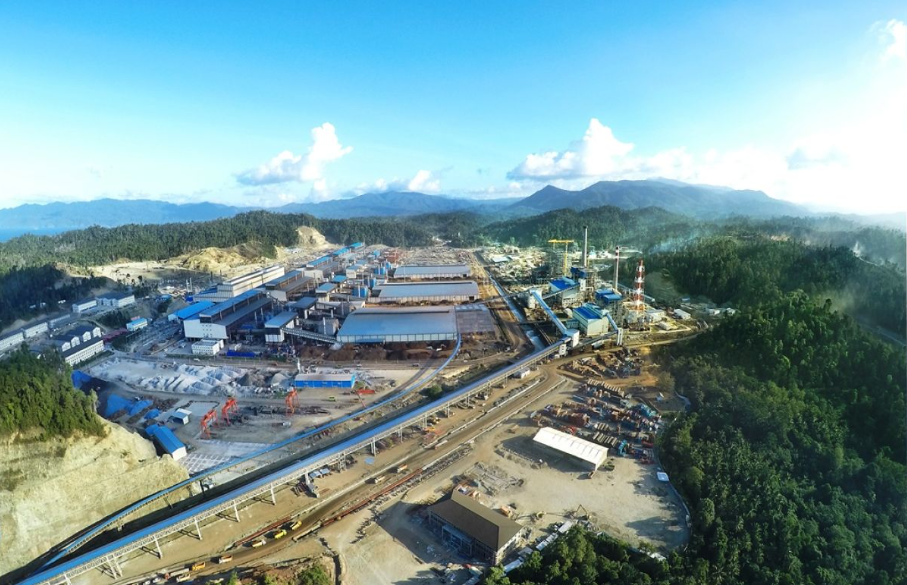
The coastal industrial zone extending from Panjang Port through Srengsem toward the Bakauheni corridor contains the primary concentration of Bandar Lampung City's maritime and heavy industry activity. Shipyard operations in the Panjang area service domestic cargo vessels, fishing fleets, and inter-island ferry vessels using Lampung Bay as an operational base.
Panjang Port handles bulk commodity export, container operations, and general cargo under PT Pelabuhan Indonesia II management, operating as the primary export gateway for Lampung's agricultural and extractive commodities flowing from the provincial interior to international markets.
The heavy industry belt along the southern waterfront includes fertilizer distribution and production nodes, cement distribution operations, and fuel storage infrastructure serving both the industrial zone and the broader provincial supply network.
The concentration of maritime services, bulk handling infrastructure, and heavy industry in the Panjang and Bumi Waras districts gives that corridor an industrial character distinct from the commercial and administrative zones of Tanjung Karang, creating a clear functional zoning across the city's horizontal geography that reflects its dual port-and-administration origin.
Radin Inten II Airport and Panjang Port as the City's Connectivity Infrastructure
Radin Inten II International Airport carries IATA code TKG and sits in Natar, South Lampung Regency, approximately 23 kilometers northwest of Bandar Lampung City's center. The airport is named after Radin Inten II, a Lampung nobleman and National Hero of Indonesia who lived from 1834 to 1858.
Originally built in 1942 as a military airfield under the name Branti Airport, the facility has undergone multiple expansions and was designated an international airport before its international status was temporarily revoked in 2024 due to absence of sustained international services, then reinstated in 2025.
The 2023 passenger volume reached 918,954 with 6,809 aircraft movements, connecting Bandar Lampung to Jakarta, Batam, Surabaya, Medan, and Palembang through domestic carriers including Garuda Indonesia, Citilink, Batik Air, Lion Air, and Wings Air.
Panjang Port sits within the southern industrial coastal zone and operates under PT Pelabuhan Indonesia II as the province's primary maritime cargo gateway. The port handles container loading and discharge, bulk commodity export, and general cargo operations serving Lampung's agricultural export economy.
Together, Radin Inten II Airport and Panjang Port form the two primary connectivity nodes that define Bandar Lampung City's accessibility from both the air and sea dimensions of its geographic position.
Trans-Sumatra Toll Road, Bakauheni-Terbanggi Besar, and the Multimodal Logistics Network
The Bakauheni-Terbanggi Besar toll road section represents the most operationally significant segment of the Trans-Sumatra Toll Road network for Bandar Lampung City's logistics position. Stretching approximately 140 kilometers from the Bakauheni ferry terminal at the southern tip of Sumatra to Terbanggi Besar in Central Lampung, this section was groundbroken on 30 April 2015 and developed by PT Hutama Karya with the first sections inaugurated in January 2018.
The Bakauheni ferry terminal connects directly to Merak Port in Banten, Java, making the Bakauheni-Terbanggi Besar corridor the critical land bridge between the two most economically productive islands in Indonesia.
The toll road integrates multiple interchange points serving Bandar Lampung City's industrial and commercial zones, including the Lematang interchange providing access to the Tanjungbintang industrial area east of the city and the Branti interchange connecting to Radin Inten II Airport.
The broader Trans-Sumatra network, developed in phases by Hutama Karya under a government assignment framework, projects a continuous toll road spine from Aceh in the north to Lampung in the south.
Bandar Lampung City's position at the southern terminus of this network places it structurally as the primary entry gateway from Java into the entire Sumatran toll road system, amplifying its existing role as the dominant logistics and distribution hub for southern Sumatra.
Balamp Metropolitan Projection and the Future of the Sunda Strait Economic Corridor
The Bandar Lampung Metropolitan area referred to in regional planning frameworks as Balamp encompasses Bandar Lampung City together with surrounding regencies including South Lampung, Pesawaran, and Pringsewu, producing a combined metropolitan population estimated at approximately 1.6 million.
The Balamp projection reflects a planning recognition that the city's economic and demographic gravity has already expanded beyond its administrative boundary, requiring coordinated infrastructure, land use, and service delivery across a broader urban functional region.
Industrial zones in Tanjungbintang and Natar, residential expansion into Pesawaran, and logistics infrastructure in South Lampung all function as integrated extensions of Bandar Lampung City's urban economy.
The Sunda Strait Economic Corridor concept frames the geography between southern Sumatra and western Java as a unified economic zone rather than a boundary between two islands. Bandar Lampung City occupies the Sumatran anchor position in this corridor, with the Bakauheni-Merak ferry crossing handling over 5 million vehicle crossings annually as the primary physical manifestation of Java-Sumatra economic integration.
Long-term infrastructure discussions have periodically included a fixed crossing across the Sunda Strait in the form of a bridge or tunnel, which would fundamentally transform Bandar Lampung City's position from a ferry-dependent gateway into a direct land-connected Pacific-Indian expansion node on the western Sumatran coast, reshaping the city's logistics, investment, and demographic trajectory over the following decades.