
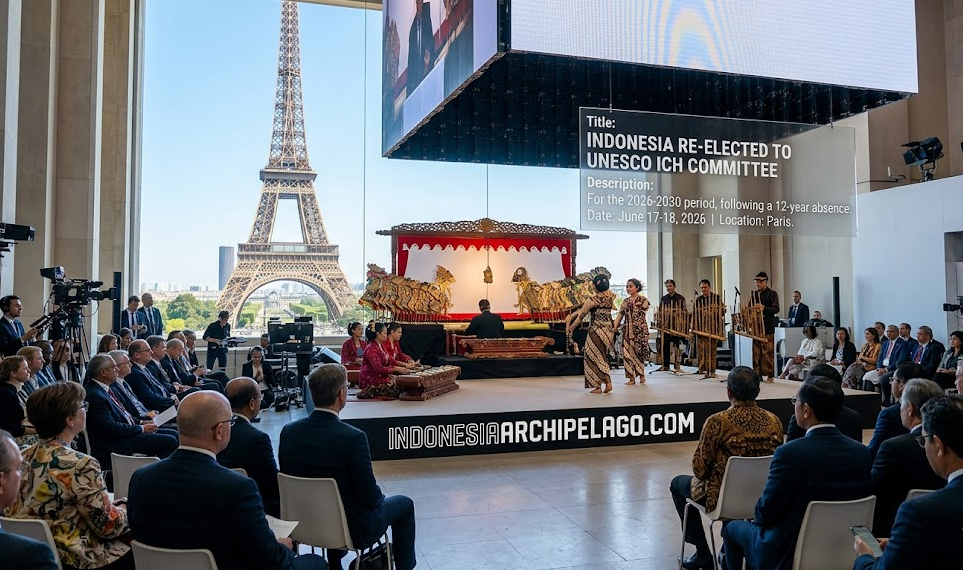
Indonesia at UNESCO has secured a seat at the table that decides how the world protects living culture, and the timing feels symbolic. On 17 to 18 June 2026, delegates gathered at UNESCO headquarters in Paris for the 11th General Assembly of States Parties to the 2003 Convention, and when the votes were tallied, Indonesia walked away with a renewed mandate it had not held in over a decade.
A Twelve Year Gap Finally Closes
The wait was long. Indonesia at UNESCO last held a seat on this committee between 2010 and 2014, and since then the country watched from the sidelines as global heritage policy took shape without a direct Indonesian voice in the room. That absence mattered more than it might appear on paper, since committee decisions shape which traditions receive funding, recognition, and protection priority worldwide.
That changed when Indonesia earned 113 votes from UNESCO member states, securing its place alongside Japan with 117 votes, the Philippines with 106 votes, and Cambodia with 97 votes in Group IV representing Asia-Pacific.
The four winning nations had competed against six total candidates, including South Korea and Turkmenistan, making the contest tighter than a routine diplomatic formality.
Vote counts at this level rarely happen by accident, and Indonesia's tally reflects months of groundwork rather than a single lucky ballot.
What stands out most is the regional pattern behind the numbers. Three ASEAN nations claimed seats in the same cycle, a clustering that rarely happens and one that Jakarta intends to use strategically in the years ahead.
Why This Committee Actually Matters
This is not a ceremonial body that meets once and issues polite statements. The Intangible Cultural Heritage Committee includes 24 nations out of 185 parties to the 2003 Convention, and it carries the responsibility of evaluating and designating cultural elements onto the global heritage list while also drafting the policy guidelines that govern cultural preservation worldwide.
Every recognized tradition, craft, or practice that earns global protection status passes through deliberations exactly like the ones Indonesia will now help shape.
In practice, this means Indonesian officials will sit in meetings that determine which traditions, crafts, and practices from anywhere on earth receive international recognition and protection funding.
A nomination from a small community in West Africa, a documentation project in Central Asia, or an emergency safeguarding request from a Pacific island nation will all cross the same table where Indonesia now holds a vote.
The influence runs in both directions. Indonesia gains a louder voice in shaping global standards, but it also inherits scrutiny over how it treats its own documentation and safeguarding practices going forward, since committee members are expected to model the policies they help write.
A Track Record That Speaks For Itself
Indonesia did not arrive at this vote empty handed. The country brought the experience of being one of the world's most culturally diverse nations, home to more than 1,340 ethnic groups and 718 regional languages, alongside 2,727 nationally recognized intangible cultural heritage elements.
Few delegations at the General Assembly could point to a domestic inventory of comparable scale, and that depth quietly reinforced every conversation Indonesian diplomats had in the lead-up to the vote.
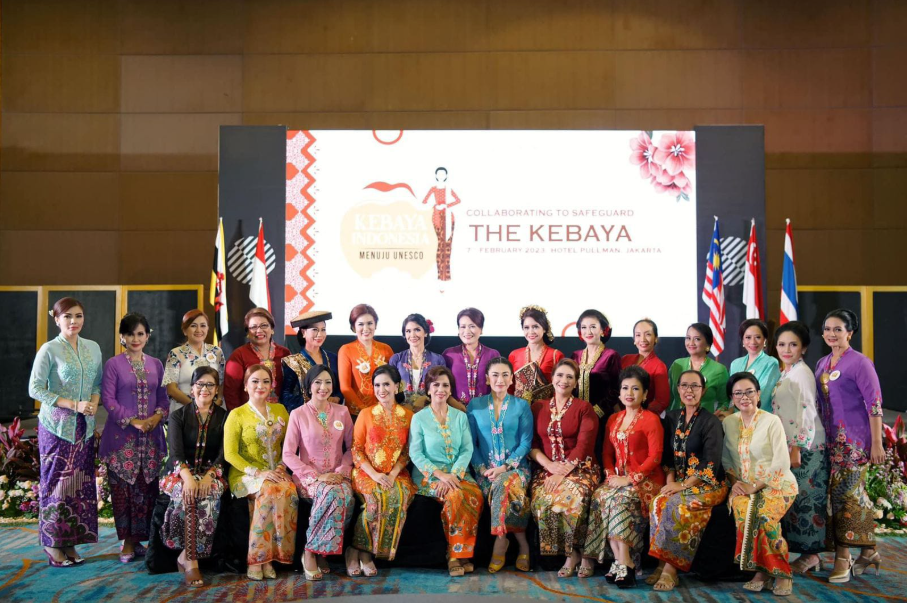
On the international stage, the credentials are just as strong. Indonesia currently holds 16 elements inscribed by UNESCO, spanning Wayang, Keris, Batik, Angklung, Noken, Saman Dance, Pencak Silat, Pantun, Gamelan, Jamu, Reog Ponorogo, Kebaya, and Kolintang.
Each of these inscriptions required years of documentation, community consultation, and sustained advocacy, which gave Indonesian negotiators concrete examples to cite rather than abstract promises.
Culture Minister Fadli Zon framed this history as more than decoration on a resume. According to the official statement, this experience gives Indonesia an important position to contribute to the development of global heritage protection policy and practice.
A point he repeated throughout the campaign whenever skeptical delegates asked why Indonesia deserved a seat after twelve years away.
The Living Heritage Pitch That Won Votes
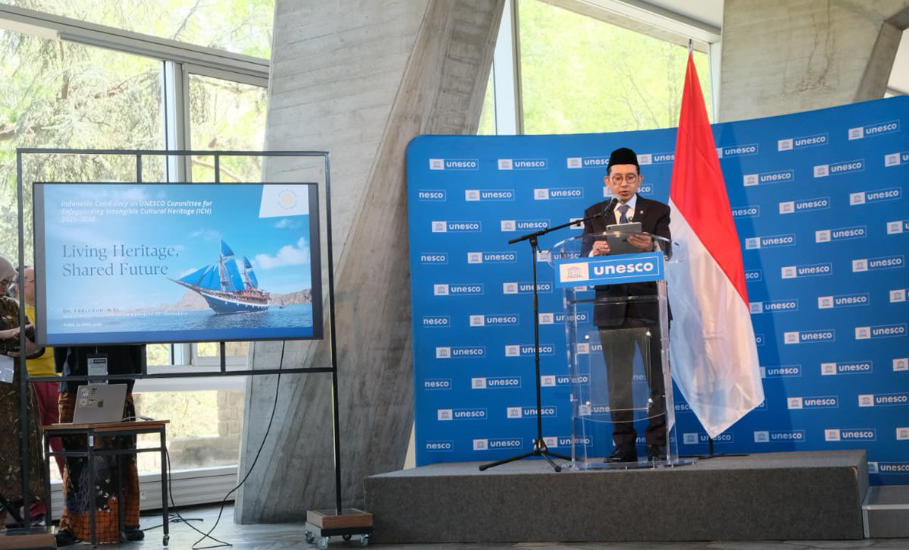
Months before the actual ballot, Indonesia had already been building its case. Back in April, Culture Minister Fadli Zon presented Indonesia's vision and priorities directly to roughly 300 delegates from member states and the UNESCO secretariat, framing the candidacy around a platform called Living Heritage, Shared Future. The pitch was not abstract policy language delivered from behind a podium and forgotten by lunchtime.
The platform placed communities at the center of every heritage protection effort, while emphasizing cultural justice, inclusive participation and innovation, plus international cooperation paired with sustainable development.
Each element of that framing was designed to answer a specific concern smaller and developing nations raise about heritage governance, namely that protection decisions often get made far away from the communities actually keeping a tradition alive.
To make the point land, Indonesia performed Tari Pendet and Gamelan during the presentation, both already inscribed as UNESCO intangible heritage, turning policy language into something delegates could actually watch and hear.
Diplomacy through performance is an old tactic, but pairing it with a substantive policy platform gave the demonstration weight beyond spectacle.
Indonesia at UNESCO: Community First, Not Government First
Deputy Culture Minister Giring Ganesha had laid out the philosophy behind this approach weeks earlier, and it cuts against how heritage policy sometimes gets discussed in purely bureaucratic terms.
Indonesia's vision insists that protection of intangible cultural heritage has to start from the community itself, since heritage stays alive only because communities continue practicing it, passing it down, adapting it, and treating it as part of their own identity.
That framing matters because it shifts the committee's likely posture away from top-down designation lists and toward something closer to grassroots stewardship.
A government ministry can document a tradition, but it cannot keep that tradition breathing without the people who actually perform it, cook it, weave it, or sing it generation after generation.
This community-first stance also positions Indonesia as a bridge between two camps that often talk past each other at international cultural forums, namely large nations with sophisticated bureaucratic documentation systems, and smaller nations whose heritage survives primarily through oral transmission and informal community practice.
Indonesia's own diversity, spanning both organized institutional traditions and remote indigenous practices, gives it credibility speaking to both groups.
A Laboratory Built for the Region
The most concrete idea on Indonesia's agenda is also its boldest. The first priority Indonesia intends to push is establishing Mega-Laboratories on Cultures, Early Human History, and Civilization, designed to function as a center of excellence for developing protection methodology across Asia-Pacific. This is not a vague aspiration buried in a press release that nobody will revisit in two years.
According to TVRI's coverage of the candidacy, Fadli Zon also presented a concrete proposal for an Asia-Pacific Center for Community-Based Safeguarding of Intangible Cultural Heritage, with the institution proposed as a UNESCO Category 2 Centre.
Category 2 status would give the facility formal UNESCO affiliation without requiring the full funding and governance structure of a Category 1 institute, making it a realistic near-term goal rather than a decades-long aspiration.
A regional laboratory based in Indonesia would give Asia-Pacific nations a dedicated hub rather than relying on Paris alone for technical support, training, and methodology development.
For smaller countries in the region with limited cultural ministry budgets, proximity alone could meaningfully lower the barrier to participating in international heritage documentation work.
Eight Priorities Now on the Table
Once the seat was confirmed, the full scope of Indonesia's eight priorities came into focus, and it reads less like a wish list and more like an operating plan. Beyond the regional laboratory, the program spans digital inventory development, the use of artificial intelligence for documentation, and ethical data governance, an unusually forward-looking inclusion for a heritage body often associated with archives and ceremonies rather than algorithms.
The remaining priorities cover strengthened global cooperation through training programs, fellowship exchanges, joint missions, and cross-regional knowledge sharing, alongside reinforced protection mechanisms for endangered traditions through the Urgent Safeguarding List.
Indonesia also committed to improving access to international assistance for traditions at risk of disappearing, expanding civil society participation in committee decision-making, and preparing cultural policy for challenges that barely existed when the 2003 Convention was first drafted, including digital ethics, artificial intelligence, and climate resilience for cultural practices tied to specific landscapes.
Each priority connects back to the same underlying thread, which is heritage protection built to survive contact with bureaucracy rather than getting buried by it.
A laboratory without a digital governance framework risks becoming a data hoarding exercise, and a safeguarding mechanism without civil society input risks missing the traditions that need help most urgently.
A Platform Bridging Academics And Practitioners
One of the more practical commitments on the list involves integration of a collaborative platform meant to connect academics, local communities, cultural practitioners, and policymakers into a single inclusive and participatory protection model.
This matters because heritage policy has historically suffered from disconnect, where scholars publish findings practitioners never see, and practitioners hold knowledge policymakers never access in usable form.
Closing that gap is less glamorous than a Paris vote count, but it may end up being the priority that determines whether the other seven actually work.
A center of excellence means little if researchers never speak with the artisans, dancers, and storytellers whose knowledge they are meant to protect.
Fadli Zon Calls It a Milestone, Not a Finish Line
Reacting to the result, Fadli Zon described the win as a milestone strengthening Indonesia's role in global cultural governance, calling it both an honor and a significant responsibility in remarks reported by Detik.
He noted the achievement also reflects something beyond vote counts, since it demonstrates that Indonesia holds not just an exceptionally rich and diverse cultural heritage, but the actual capacity to help shape a more inclusive, sustainable, and community centered future for global heritage governance.
That framing of milestone rather than finish lines appears deliberate. Committee membership lasts only until 2030, and any nation that treats a seat as a trophy rather than a working assignment tends to lose influence quickly once the next election cycle arrives.
Indonesia's eight-point agenda suggests an awareness that the real test starts now, not when the votes were announced.
Diplomacy Behind the Scenes
None of this happened through a single campaign speech back in April. Officials from the Foreign Ministry pointed to months of intensive diplomacy carried out by the Indonesian delegation across Paris, Jakarta, and various representative offices, with support gathered from friendly nations along the way.
Ambassador Mohamad Oemar, Indonesia's permanent delegate to UNESCO, called the win a major mandate carried out with full responsibility, signaling Jakarta understands the seat comes with scrutiny attached.
Behind the scenes, the campaign drew on institutions that rarely get public credit for cultural diplomacy. The Foreign Ministry, the Indonesian Embassy in Paris, the permanent delegation to UNESCO, and the national commission secretariat all worked in close coordination, according to the official account Fadli Zon shared after the result.
What Reog Ponorogo's Inscription Already Proved
Indonesia's heritage credibility did not start with this committee seat. The path that led Reog Ponorogo onto the UNESCO list earlier offers a preview of how patient and community driven the process can be, requiring sustained documentation and years of grassroots advocacy before international recognition followed.
That same patience now becomes an institutional asset rather than a one-off campaign tactic. Communities in Ponorogo who spent years building the case for Reog's inscription essentially road-tested the documentation playbook that Indonesia's broader committee strategy now relies on, and the regional laboratory proposal aims to make that playbook accessible to communities elsewhere in Asia-Pacific.
Where Asia-Pacific Heritage Goes From Here
With Japan, the Philippines, and Cambodia also seated in the same regional bloc, Asia-Pacific now holds a meaningfully louder voice inside a committee that shapes global cultural policy for the next four years. Four nations voting in coordination, even informally, can shift the tone of committee debates in ways a single delegate never could.
For Indonesia specifically, the work now shifts from campaigning to governing, and the proposed regional laboratory will likely become the clearest early signal of whether Jakarta can convert diplomatic momentum into lasting institutional infrastructure that benefits the wider region rather than just Indonesia's own heritage list.
The next four years will show whether Living Heritage, Shared Future was a winning slogan or an actual governing philosophy, and communities across the archipelago will be watching closely to see which one it turns out to be.