
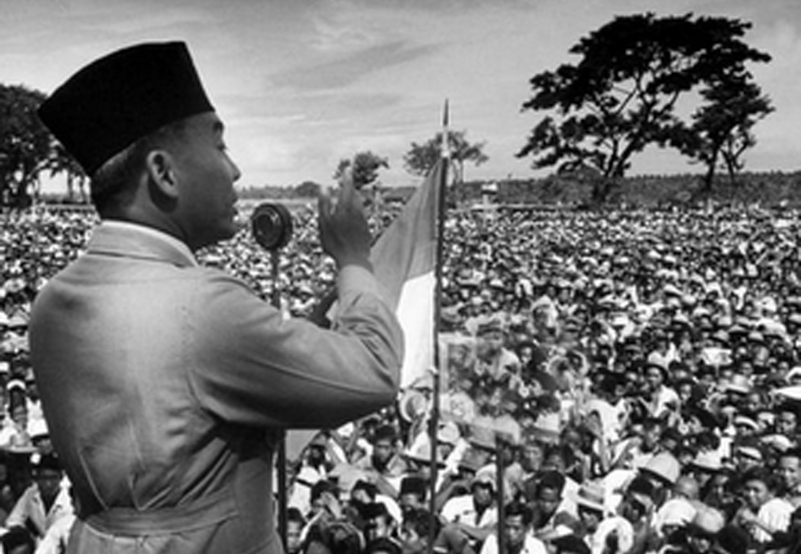
The presidency of Indonesia is the constitutional apex of the world's largest archipelagic democracy, holding simultaneous authority as head of state, head of government, and supreme commander of the Tentara Nasional Indonesia. Its legal foundation was ratified by the “Panitia Persiapan Kemerdekaan Indonesia” on August 18, 1945, one day after the proclamation of independence, when Soekarno was formally appointed as the Republic's first president under the 1945 Constitution.
Eight individuals have formally served as President of the Republic of Indonesia from that date to the present. The complete historical record, however, extends to ten figures. Two additional individuals assumed executive authority during constitutional emergencies, governing the Republic through periods of foreign occupation and structural transition when its institutional survival was genuinely at risk.
Recognizing both the official and the emergency record provides an honest account of how Indonesia sustained legitimate governance from revolution through the democratic present. Since 2004, presidents and vice presidents have been elected through direct popular vote with a maximum of two five-year terms, and every transition in that era has proceeded peacefully.
The Founding Era and the Revolution (1945-1950)
Soekarno (August 18, 1945 - March 12, 1967)
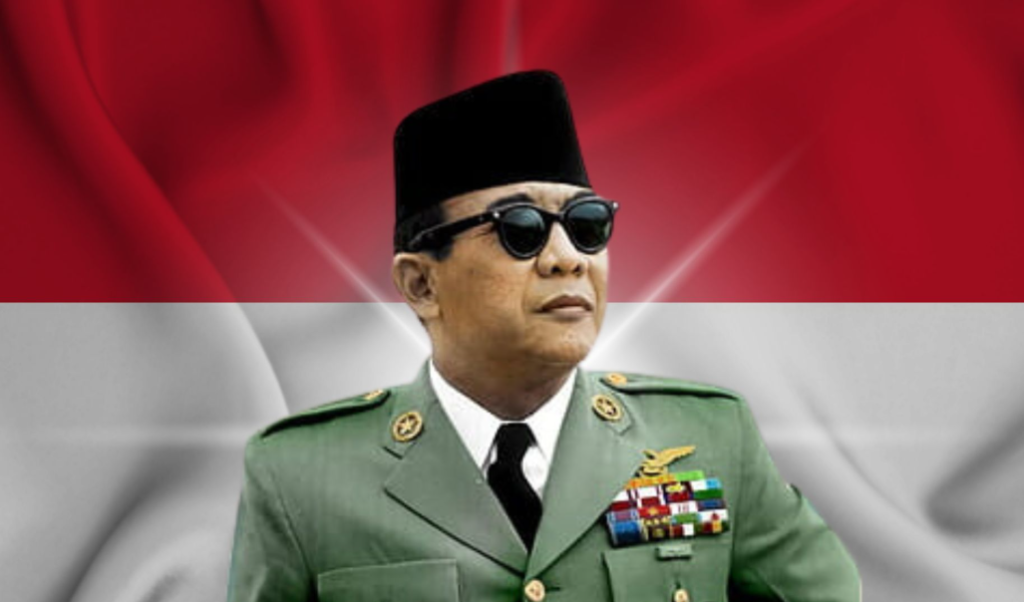
Ir. Soekarno was born on June 6, 1901, in Surabaya, East Java. Trained as a civil engineer at what is now the Bandung Institute of Technology, he redirected his formation toward political organizing, co-founding the Indonesian National Party in 1927 and enduring multiple periods of Dutch colonial imprisonment before independence was proclaimed.
As Indonesia's founding president, Soekarno governed across three phases. The revolutionary period from 1945 to 1949 saw the Republic fighting for recognition against Dutch reoccupation while building a fragile state architecture. The 1950s brought parliamentary democracy under a succession of cabinet governments.
From 1959 onward, Soekarno suspended the provisional constitution, returned to the 1945 Constitution, and introduced Guided Democracy, concentrating political authority around his personal leadership and positioning Indonesia as a leading voice of the Non-Aligned Movement. The 1955 Bandung Conference gave Indonesia an international profile far exceeding its economic weight.
His presidency ended through the political fallout of the September 30, 1965 affair. The MPRS formally revoked his authority on March 12, 1967. He passed away under house arrest on June 21, 1970.
Sjafruddin Prawiranegara (December 22, 1948 - July 13, 1949)
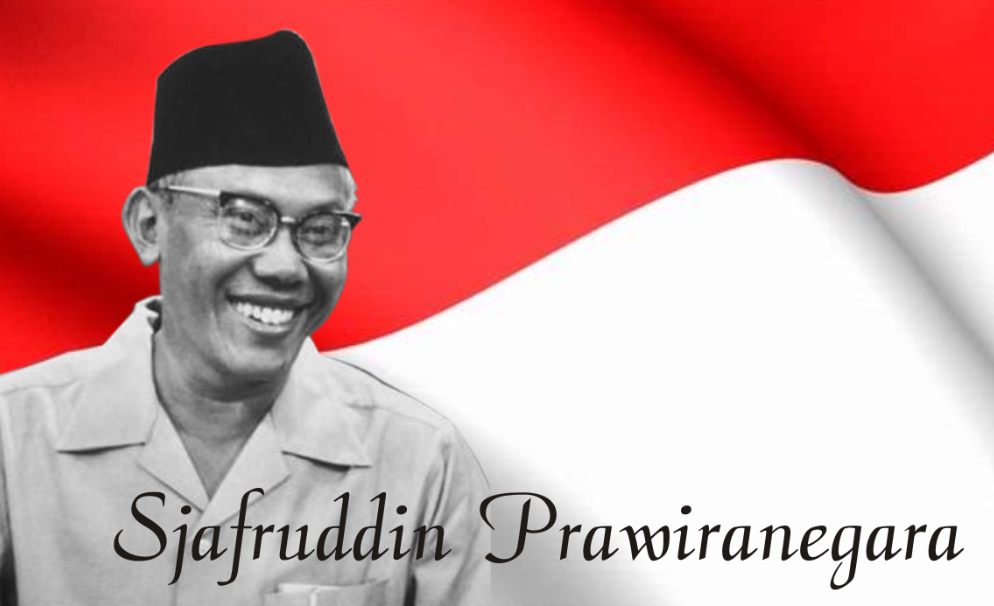
Born on February 28, 1911, in Serang, Banten, Sjafruddin Prawiranegara was a jurist and economist who served as Minister of Prosperity in the Republican cabinet when the events of December 1948 placed him at the center of Indonesia's most critical wartime crisis. On the morning of December 19, 1948, Dutch forces launched Operasi Kraai, seizing Yogyakarta, capturing Soekarno and Hatta, and severing Republican communications.
The Balai Kirti state archives document that Soekarno and Hatta had dispatched a telegram authorizing Sjafruddin to establish an emergency government in Sumatra, but the message never arrived because Dutch forces had destroyed the radio network.
Sjafruddin, already in Bukittinggi, acted on his own initiative. On December 22, 1948, the Pemerintahan Darurat Republik Indonesia (PDRI) was formally established at Halaban, South Payakumbuh, with Sjafruddin simultaneously holding the roles of chairman, minister of defense, minister of information, and acting minister of foreign affairs.
The PDRI functioned as Indonesia's government in exile until July 13, 1949, when Sjafruddin personally returned the mandate to Soekarno at a cabinet session in Yogyakarta following the Roem-Royen Agreement.
He is absent from the official presidential count but was declared a National Hero. He passed away on February 15, 1989.
Assaat (December 27, 1949 - August 15, 1950)
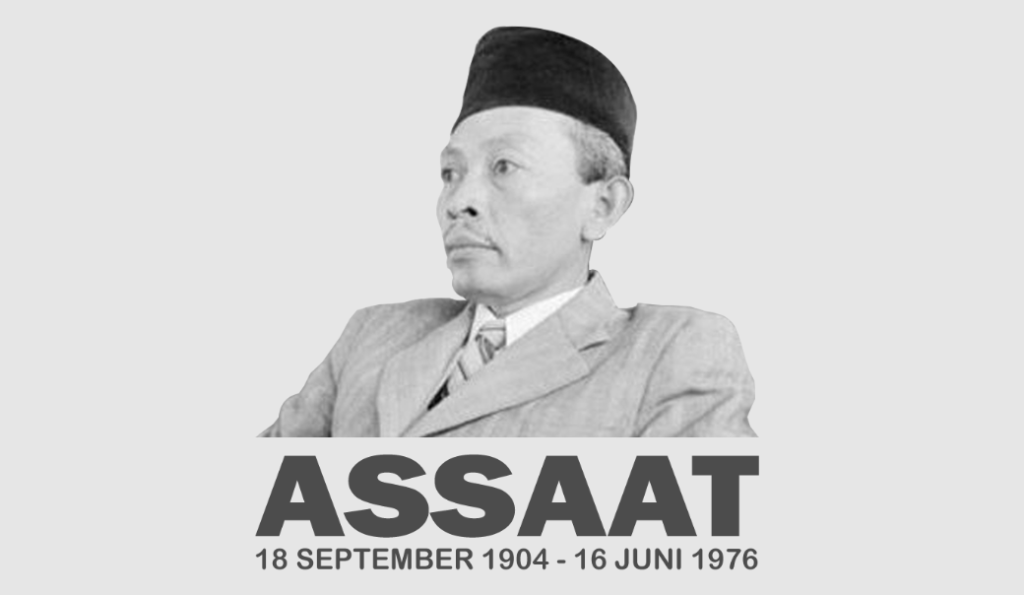
Mr. Assaat was born in West Sumatra in 1904 and served as Chairman of the Central Indonesian National Committee (KNIP) when the Konferensi Meja Bundar restructured Indonesia into the Republic of the United States of Indonesia (Republik Indonesia Serikat/RIS), effective December 27, 1949.
Because Soekarno and Hatta assumed the offices of RIS President and Prime Minister respectively, the presidency of the constituent Republic of Indonesia fell vacant. Per the constitutional arrangement then in force, executive responsibility passed to the KNIP chairman, making Assaat the Pemangku Sementara Jabatan Presiden Republik Indonesia.
He served approximately eight months until August 15, 1950, when the federal structure was dissolved and Indonesia reconstituted as a unitary republic, at which point Assaat returned authority to Soekarno. He passed away on June 16, 1976.
The New Order Era (1967-1998)
Soeharto (March 12, 1967 - May 21, 1998)
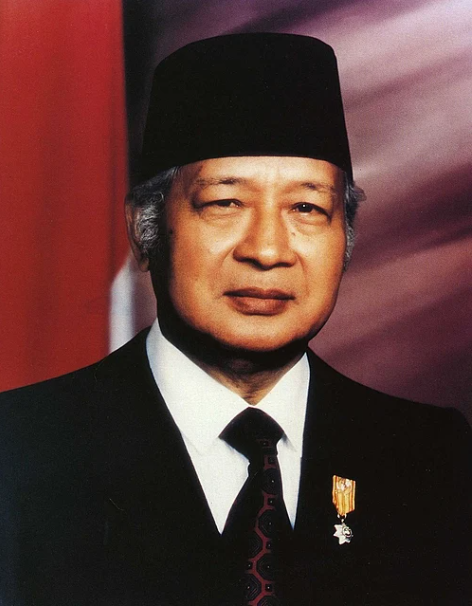
Jenderal Besar Soeharto was born on June 8, 1921, in Kemusuk, Yogyakarta. A career military officer who commanded the West Irian campaign in the early 1960s, he became Indonesia's dominant political-military figure after the September 30, 1965 affair. Through Ketetapan MPRS No. XXXIII/MPRS/1967, issued March 12, 1967 with retroactive effect from February 22, 1967.
The MPRS revoked Soekarno's governmental mandate and designated Soeharto as Acting President. He was confirmed as Indonesia's second official president on March 27, 1968.
His New Order administration governed 31 years, building a development-oriented economy that significantly reduced poverty through export industries and foreign investment while maintaining strict controls on political parties, the press, and civil society.
The 1997 Asian financial crisis exposed structural vulnerabilities accumulated over decades. Mass student-led protests escalated through early 1998, and Soeharto resigned on May 21, 1998. He passed away on January 27, 2008.
The Reform Era (1998-2004)
Bacharuddin Jusuf Habibie (May 21, 1998 - October 20, 1999)
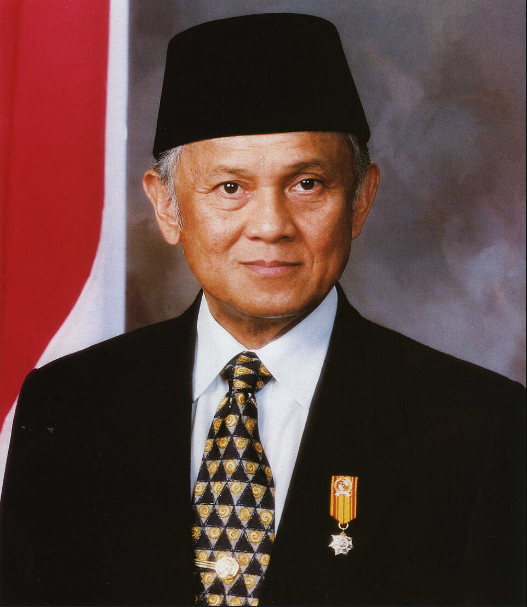
Prof. Dr. B.J. Habibie was born on June 25, 1936, in Parepare, South Sulawesi. An aeronautical engineer who spent nearly two decades in Germany before returning to lead state strategic industries under Soeharto, he was serving as Vice President when Soeharto resigned and was sworn in immediately as Indonesia's third president.
His 17-month presidency produced the foundational democratic reforms that shaped the post-New Order era: releasing political prisoners, dismantling press licensing restrictions, enabling freedom of political association, and authorizing Indonesia's first free election since 1955.
His decision to permit a referendum in East Timor drew domestic political costs, and the MPR's rejection of his accountability report in October 1999 ended his tenure. He passed away on September 11, 2019.
Abdurrahman Wahid (October 20, 1999 - July 23, 2001)
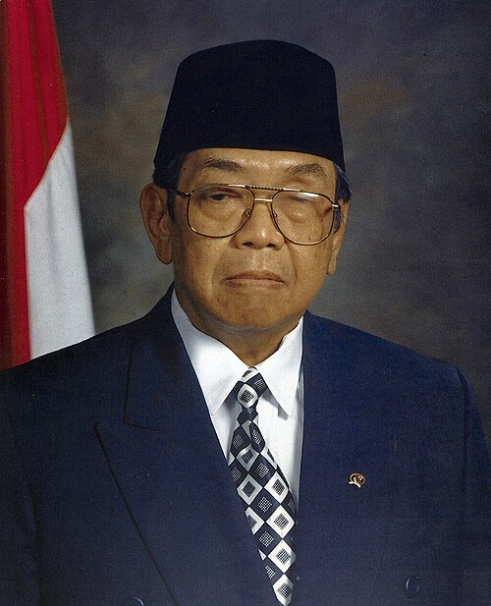
KH. Abdurrahman Wahid, known as Gus Dur, was born on September 7, 1940, in Jombang, East Java. The national chairman of Nahdlatul Ulama, Indonesia's largest Muslim organization, he was elected Indonesia's fourth president by the MPR through a parliamentary coalition that overcame Megawati Soekarnoputri's larger bloc.
His presidency championed pluralism and military accountability. Persistent conflicts with parliament and deteriorating health led the MPR to remove him on July 23, 2001. He passed away on December 30, 2009.
Megawati Soekarnoputri (July 23, 2001 - October 20, 2004)
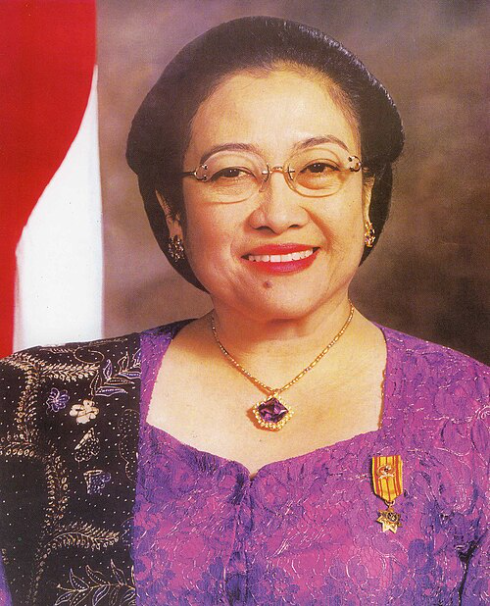
Born on January 23, 1947, in Yogyakarta, Megawati Soekarnoputri is the eldest daughter of Indonesia's founding president and leader of PDI-P. She became Indonesia's fifth president and the first woman to hold the office on July 23, 2001, ascending from the vice presidency upon the MPR's removal of Abdurrahman Wahid.
Her administration prioritized macroeconomic stabilization and decentralization. She contested the 2004 direct election but was defeated by Susilo Bambang Yudhoyono in the second round.
The Democratic Era (2004-Present)
Susilo Bambang Yudhoyono (October 20, 2004 - October 20, 2014)
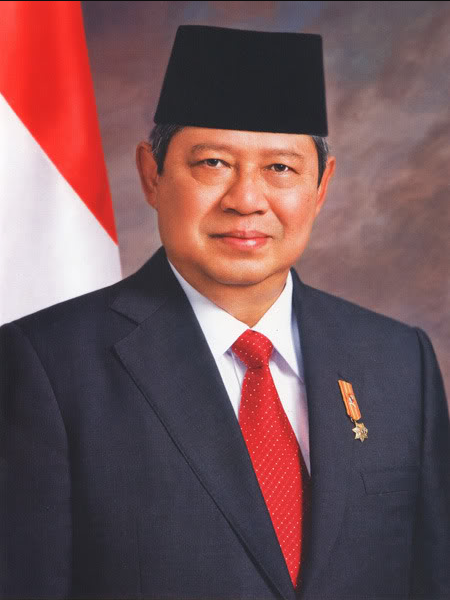
Dr. H. Susilo Bambang Yudhoyono, known as SBY, was born on September 9, 1949, in Pacitan, East Java. A retired Army general turned cabinet minister, he became Indonesia's sixth president after winning the 2004 election, the first direct presidential contest in Indonesian history, by a decisive margin.
He served two terms with Vice Presidents Jusuf Kalla and Boediono, producing consistent GDP growth above five percent annually, strengthening the Corruption Eradication Commission, and expanding Indonesia's multilateral diplomatic engagement.
His government also led the national and international response to the December 2004 Indian Ocean tsunami.
Joko Widodo (October 20, 2014 - October 20, 2024)
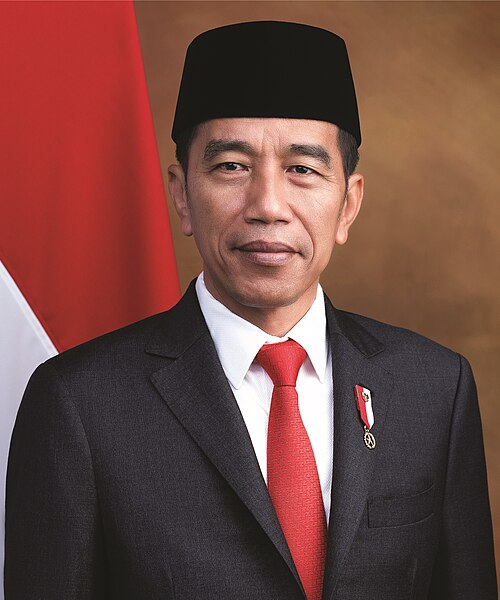
Ir. H. Joko Widodo, known as Jokowi, was born on June 21, 1961, in Surakarta, Central Java. A furniture entrepreneur turned elected official who served as Mayor of Surakarta and Governor of Jakarta, he became Indonesia's seventh president after winning the 2014 election.
His two terms with Vice Presidents Jusuf Kalla and Ma'ruf Amin delivered the most extensive infrastructure program in Indonesia's post-independence history, covering toll roads, seaports, airports, and rural connectivity across the eastern archipelago.
His second term advanced downstream resource processing, digital economy development, and the Nusantara capital project in East Kalimantan. He completed his constitutionally mandated final term on October 20, 2024.
Prabowo Subianto (October 20, 2024 - Present)
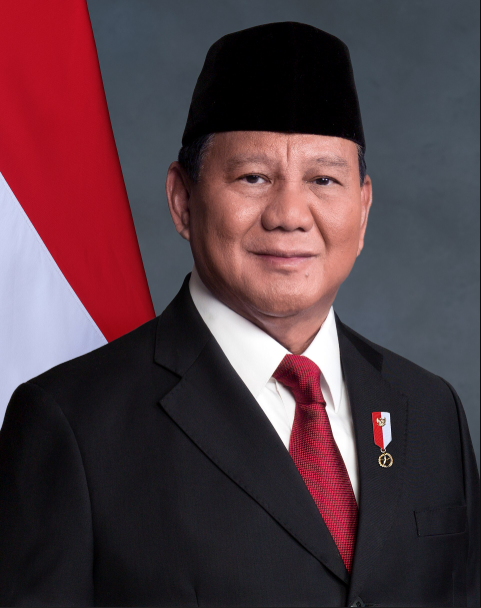
Jenderal TNI (Purn.) H. Prabowo Subianto was born on October 17, 1951, in Jakarta. A career officer who commanded Kopassus and Kostrad, he founded the Gerindra Party in 2008 after retiring from active service and contested the presidency in 2014 and 2019 before winning the 2024 election in the first round with approximately 58 percent of the popular vote.
He was inaugurated as Indonesia's eighth president on October 20, 2024, alongside Vice President Gibran Rakabuming Raka. His administration has committed to food sovereignty, domestic energy security, and continuity in the development of Nusantara as the national capital.
Footnotes
The Transfer of Presidential Authority in Indonesia
Indonesia's constitutional framework has required mechanisms for delegating executive authority outside the normal electoral cycle across several periods of its history. The 1945 Constitution establishes the presidency as an undivided executive while providing for acting appointments in cases of incapacity or vacancy.
The crises of 1948 and 1949 produced two situations where those mechanisms, interpreted under emergency conditions, allowed governance to continue when the constitution's drafters could not have anticipated the precise circumstances in advance.
The Formation of the PDRI
The Emergency Government of the Republic of Indonesia (PDRI) was established in direct response to the Second Dutch Military Aggression on December 19, 1948. Dutch forces seized Yogyakarta, captured President Soekarno and Vice President Mohammad Hatta, and dismantled the Republican communication infrastructure.
A telegram from Soekarno and Hatta authorizing Sjafruddin Prawiranegara to form an emergency government in Sumatra was dispatched but never delivered, as Dutch forces had destroyed the radio network serving Bukittinggi.
Sjafruddin convened an emergency meeting with Sumatran Governor T.M. Hasan on the same day formally proclaimed the PDRI on December 22, 1948, at Halaban, South Payakumbuh.
Mohammad Hatta later referred to Sjafruddin as the Emergency President. The PDRI dissolved on July 13, 1949, after the Roem-Royen Agreement, when Sjafruddin personally returned the mandate to Soekarno at a cabinet session in Yogyakarta.
The RIS Period and Assaat's Role
Based on the results of the Konferensi Meja Bundar, Indonesia became the Republic of the United States of Indonesia (RIS), with the Republic of Indonesia as one of its 16 constituent states.
Because Soekarno and Hatta were elevated to RIS President and Prime Minister respectively, Assaat was appointed Pemangku Sementara Jabatan Presiden Republik Indonesia.
That role ended when RIS was dissolved and Indonesia returned to a unitary republic on August 15, 1950.
Ketetapan MPRS No. XXXIII/MPRS/1967
The legal instrument removing Soekarno from executive authority was issued through a Special Session of the MPRS on March 12, 1967. The decree revoked Soekarno's governmental mandate, prohibited his further political activity until the next general election, and designated Soeharto as Acting President.
As historical records confirm, the decree was made retroactively effective from February 22, 1967. Soeharto was confirmed as full President on March 27, 1968.