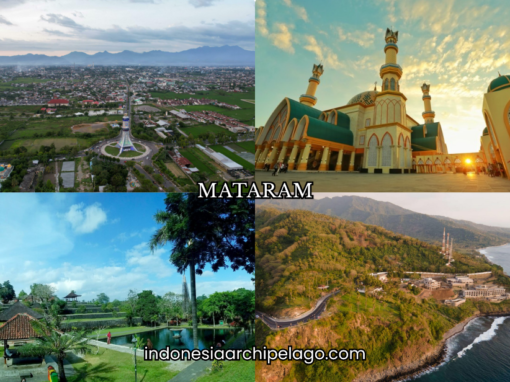
West Nusa Tenggara does not ask you to choose between the sacred and the spectacular — it offers both without apology. Lombok carries the weight of the spiritual: Mount Rinjani, an active stratovolcano and the second highest peak in Indonesia at 3,726 meters, draws trekkers and pilgrims alike to the crater lake of Segara Anak, while the Sasak villages of the interior maintain weaving traditions, adat ceremonies, and architectural forms that have survived centuries of outside influence. Sumbawa pushes in a different direction — wider, drier, less crowded, and increasingly on the radar of resort developers and surf operators who recognize what Lakey Beach and Hu'u Bay represent before the infrastructure fully arrives. The Gili Islands off northwest Lombok have already crossed into global recognition, drawing divers, free spirits, and weekend travelers from across the region who come for the coral, the silence, and the deliberate absence of motorized vehicles. For investors, the province's position in the national tourism investment corridor, its copper and gold mining output from Batu Hijau and Elang — among the largest deposits in Southeast Asia — and a growing aquaculture and seaweed export economy compose a resource profile that extends well beyond the beach. B2B connections run through Mataram's trading infrastructure, the agro-processing belt of Central Lombok, and a halal tourism supply chain that the provincial government has been actively formalizing. Local events from the Bau Nyale sea worm festival on Lombok's south coast to the Tambora cultural calendar on Sumbawa give the province a rhythm that rewards those who plan around it.
Covering a total land area of approximately 19,890 km² across two major islands and several smaller ones, West Nusa Tenggara is administered from its capital Mataram and organized into eight regencies and two cities. Its total population is projected to reach approximately 5.85 million by mid-2026 according to BPS official projection data, building on a mid-2024 census estimate of 5,726,408 and a steady provincial growth rate. Population is concentrated on Lombok, which is significantly smaller in area but far more densely settled than Sumbawa — a geographic asymmetry that shapes everything from infrastructure investment priorities to tourism carrying capacity. Provincial icons anchor both islands: the Rinjani National Park and Gili Islands Marine Recreation Park on Lombok, the Sultan of Bima Palace complex and the Tambora caldera on Sumbawa, and the Pura Lingsar temple compound near Mataram which has hosted a shared Hindu-Muslim ceremony, the Perang Topat, for centuries.
The archive assembled here navigates West Nusa Tenggara by what actually brings people in — and what keeps them longer than a single island hop. Select a category below to explore by travel destination, natural resource corridor, cultural heritage, or investment sector, each on its own terms.