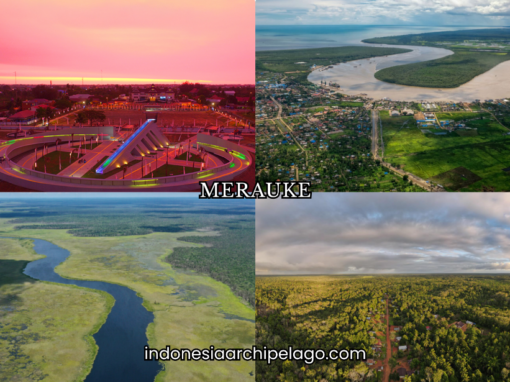
South Papua faces the Arafura Sea and shares a land border directly with Papua New Guinea — making it Indonesia's southernmost frontier on New Guinea Island and one of the country's most ecologically extraordinary territories. Established on 25 July 2022, the province encompasses four vast, low-lying regencies — Merauke, Boven Digoel, Mappi, and Asmat — each defined by expansive wetlands, sago palm forests, meandering river systems, and some of the most intact lowland tropical wilderness remaining in Southeast Asia. The Asmat region carries global cultural significance as the homeland of the Asmat people, renowned for their exceptional wood-carving tradition recognized among the world's great indigenous art forms, drawing collectors, anthropologists, and cultural travelers to the biennial Asmat Cultural Festival. The Wasur National Park in Merauke — dubbed the "Serengeti of Papua" — spans over 4,138 km² of savanna-wetland mosaic supporting wallabies, cassowaries, birds-of-paradise, and hundreds of bird species in a landscape that resembles northern Australia more than tropical Indonesia. For investors, the province carries major food security significance: Merauke has been designated as a national food estate center with one million hectares allocated for rice production under the Prabowo administration, alongside large-scale sugar and bioethanol development plans spanning over 2 million hectares.
South Papua covers 117,849 km² of southern New Guinea lowlands — the least densely populated province in all of Indonesia — bordered by the Arafura Sea to the south and Papua New Guinea to the east. The province's 560,000 residents at mid-2026 are distributed across 4 regencies with Merauke as the provincial capital and the primary commercial and aviation hub. Key provincial icons include the Wasur National Park savanna-wetland ecosystem, the Asmat wood-carving cultural heritage and its biennial festival, the Km 0 Monument in Sota marking Indonesia's southeasternmost border point, the Maro River system as a major transport artery, and the Merauke food estate corridor as the province's defining national development project.
South Papua is Indonesia's quietest frontier — vast, sparsely inhabited, and holding some of the country's most consequential ecological and agricultural assets. Whether the draw is the Asmat cultural world, Wasur's wildlife, or the Merauke food estate investment corridor, the entry points below are curated to help you navigate it with clarity.